Pain

Tendinopathy Update

The past weekend I attended Peter Malliaras's course, 'Mastering Lower Limb Tendinopathies'.

Peter is an Associate Professor at Monash University and has spent many years researching and working with people with tendon problems. 

In recent years there has been a lot of significant new research in the world of tendon rehab.

If you've ever had an issue with an ongoing tendon problem, you can understand how frustrating the long term pain and dysfunction can be. 

There is much conflicting advice and out dated treatment approaches that can contribute to the poor outcomes many people face with tendon injuries. 

Thankfully, Peter has put all of the latest based evidence into a comprehensible format and in this blog post I'd like to share just a little summary.

This blog would be particularly helpful if you suffer from ongoing pain in the:

  • Achilles tendon

  • Hamstring

  • Patella tendon

  • Hip pain/bursitis

  • Plantar fascia

What is a tendon?

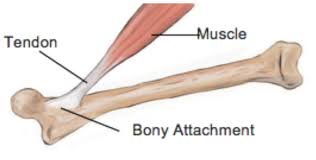
Tendons connect the muscle to bone.  They are made up primarily of collagen fibres.

In the lower limb, role of tendon is to absorb and release energy

Tendons are like springs that absorb stretching forces and then release energy when we move.
 

index.jpg


What causes tendon problems?

Tendons are very sensitive to changes in load. 

Essentially, tendons become injured when we over-load them too soon, or when demand exceeds capacity.

This can be from:

  • too much volume

  • too much intensity

  • change in footwear or surface

For example a runner may start to include sprinting or hill work too soon or increase mileage suddenly leading up to a big race.

High training load is not a risk for injuries, it's how you get there that is the important factor (i.e. avoiding acute spikes in training loads).

                   Tendons become damaged when demand exceeds their capacity

                   Tendons become damaged when demand exceeds their capacity

What is the difference between Tendinitis and Tendinopathy?

Tendinitis refers to the inflammation in the early stages of an injury. 

This is opposed to tendinopathy that refers to the process of degeneration that tendon goes through in response to chronic overload.

Recent research suggests a lot of what we previously thought of as tendon inflammation was actually related to tendinopathy.


Who is likely to suffer from a tendon problem?

Patella tendon (front of knee)

Usually occurs in younger people involved in jumping sports such as volleyball, basketball and football.  There is some evidence to suggest pathological tendon changes can begin in early adolescence if there excess load on the maturing collagen in the tendon.

Achilles tendon (back of heel)

Affects people across the lifespan, in particular long distance runners, sprinters, football and soccer players.  Often there is pain and stiffness that is worse on waking and when running. 

Gluteal tendon (side of hip)

Common in young females that are doing a lot of running or playing sport.  Also older women, especially around menopause or after post a hip injury / surgery.  Pain is often worse at night time, standing and walking.  There is some research showing a reduction in oestrogen can pre-dispose to tendinopathy. 

Hamstring tendon (back of hip)

Fast walkers, footballers, runners and people who do a lot of yoga are susceptible to hamstring tendinopathy.  They often experience pain on sitting, walking and bending forwards. 

_MG_5688.jpg

What are the key risk factors for developing tendinopathy?

One of the biggest risk factors for a tendon injury is a past injury (2-19x greater risk of injury).

According to the research, people with tendon problems are not getting the rehabilitation and re-building of capacity they need.

Often patients self-discharge when their pain has gone away

It is imperative for the treating clinician to educate the patient that rehabilitation is a two step process:

1.  Reducing pain and then

2.  Re-building capacity in the tissues to match the demands placed on them

Other systemic conditions that can increase the risk of developing tendon pain include:

  • Type 2 Diabetes ( 3 x risk)

  • High cholesterol

  • High blood pressure

  • Menopause

  • Obesity

  • Inflammatory arthropathies

Some other factors that put you at a higher risk of ongoing tendon pain:

  • unrealistic beliefs about likely healing time and optimal load management strategies

  • inaccurate beliefs pain e.g. avoiding movement due to fear or rupturing a tendon

  • too much passive treatment

  • reduced variability of movement / exercise

How is a diagnosis made? 

Tendon issues are diagnosed with a combination of history and physical testing

If you have a localised pain that gets worse with movement and you can recall a sudden change in loading, there is a good chance you have a tendon problem.

Do I need a scan? 

Ultrasound scans can be useful to confirm the diagnosis and rule out certain other conditions. 

(See below for more info on scans)

Recovery and Management :

1.  Education ... (And Addressing Beliefs About Pain)

The long term goal is to create greater capacity in the tissues and this is your job, under the guidance of the physiotherapist looking after you.  

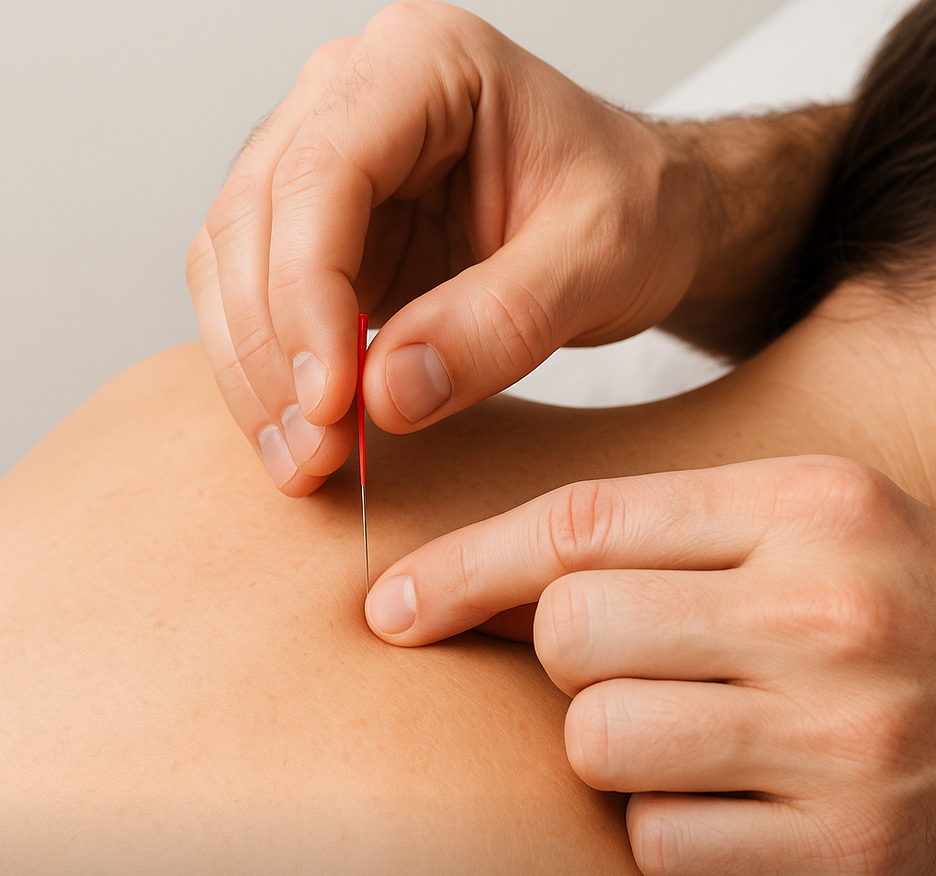
Manual therapy and dry needling does have a role to play in the short term to decrease pain and normalise muscle tone.

Credit: Jill Cook

Credit: Jill Cook

Pain and Pathology

You may have a scary sounding ultrasound report, with words such as 'severely degenerative'.

The bad news first.  Your scans will most probably always look terrible. 

Screen Shot 2017-11-28 at 10.29.25 am.png

Structurally over time, there will be no change, despite what you do in terms of treatment.

The good news:

Many high quality research studies have shown that there is no correlation between pain and structural changes on scans. 

Your tendon will always be degenerated.

However, the thing we do have control over is the mechanical adaptation in the tissues around the tendon, as well as optimising biomechanics and sharing the load around the body.

The goal of treatment is to build the capacity in the tissues surrounding the tendon so that it meets the demand and creates a buffer zone of relaxation.

Some very important things to remember:

"Pathology is common in people without pain, so it cannot be the cause of pain.

Worse pathology does not mean it will be harder for you to get better.

Tendon pathology often does not change, even when the pain resolves" - Peter Malliaras
 

Recovery Time Line

It's important to understand the nature of recovery is often a case of 2 steps forward and 1 step back pattern. 

It's normal for your pain levels to fluctuate.

If you can accept this, while continuing with your rehab, you will have a much greater chance of success.

Credit: Adam Meakins

Credit: Adam Meakins

2.  Reduce the load temporarily while reducing pain and inflammation

Pain can be brought under control by managing load and using ice and NSAID's. 

You may need to take a short break from any aggravating activities.

If you can't take anti-inflammatories you may need to look at your diet for areas to address inflammation.

How can isometrics help decrease pain?

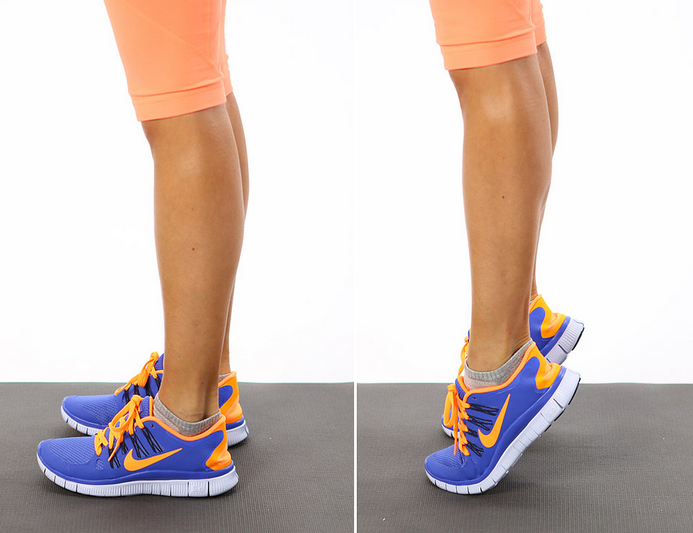
Isometric refers to a static contraction of a muscle without any movement. 

For example the diagram below shows an isometric contraction of the calf/achilles:
Screen Shot 2017-11-28 at 10.38.20 am.png

Benefits of isometric contractions in tendon healing (Malliaras et al 2013):

  • Isometrics can decrease pain without adding excess load to the tendon.  

  • time under tension can be maximized to allow greater tendon strain, which is a likely stimulus for tendon adaptation

  • there is minimal soreness after doing isometrics, making them an ideal exercise 'during season'

  • loading can be performed in a range that is not painful and tendon compression can be minimized

The positive research around isometrics is in it's early stages and mainly focuses around the patella tendon.

3. Assess current load capacity and tolerance then begin re-loading the tendon.

Your Physiotherapist will take you through a comprehensive load capacity assessment and then develop a re-loading strategy.

This most important factor is that we progress the load over time to bring out positive adaptation and improved load tolerance. 

You will most likely meet with your Physio once per week in the short term to closely monitor and progress the load at a suitable rate.


4.  Clean up biomechanical issues and kinetic chain deficits

Biomechanical issues that may need addressing:

  • poor running technique

  • over-pronation

  • landing mechanics

  • postural issues

Kinetic chain deficits that may need addressing:

  • weak glutes

  • weak calves

  • weak quads

  • weak hamstrings, adductors

  • weak core

  • excessively tight muscles and joint restrictions

We will address these factors in the clinic.  By optimising your movement efficiency, you will increase the likelihood of successfully returning to doing what you love and staying pain-free.

Screen Shot 2017-11-28 at 10.42.00 am.png

5.  Progress the load and build capacity to greater than demand and gradually ease back into sport / exercise

This is where you get to really to push the boundaries of building capacity and gradually resume training and getting back to what you love. 

It's important at this stage to think not only about training but also proper recovery to allow the tissues to optimally adapt. 

You will want to optimise things like sleep, food / protein intake and foam rolling to keep your muscles tuned up.

This stage may weeks / months to fine tune and this is where we will monitor you loads to ensure a successful return.


In Summary - 5 Take Home Messages:

1.  There Is Hope

Despite your ugly looking scan and long-term pain, there is good evidence to suggest you can make a good recovery and get back to doing what you enjoy.

2.  It Takes Time

Tendons are resilient and adapt.  But you need to give them time. 

The time-frame on average to achieve this is a minimum of 12 weeks (but continual small improvements can still occur up to 5 years later).

3.  Get Assessed By A Physiotherapist

There is a significant degree of complexity involved in a tendon problem and a Physiotherapist, after a comprehensive assessment will be able to guide you towards a positive outcome. 
Screen Shot 2017-11-28 at 11.18.21 am.png

4.  Only Exercise Can Increase Load Tolerance

"Your tissue capacity will only be as good as the load you put on it" - Professor Jill Cook

The end game is to build your resilience and capacity to create a 'buffer' zone of relaxation. 

5.  Think Quality Of Movement Before Quantity

Movement capacity develops step by step

Small mindful movement of the muscle-tendon complex can improve efficiency and help ensure that your tendon issue becomes a thing of the past.

This is where Pilates can be very useful. 

Pilates provides the perfect environment for sharpening the mind-muscle connection and also introduces elements of movement variability that help improve resilience.

Screen Shot 2017-11-28 at 11.20.12 am.png


Bonus Tips:

  • PRP injections are a waste of time

  • Steroid injections can have short term benefit but 12 months later can end up worse due to weakening of the tendon.

  • Fast walking can cause hamstring issues

  • For a tendon problem, generally it's best to avoid stretching

  • Hip bursitis is treated with same strategies as gluteal tendinopathy

  • Extracorporal Shockwave therapy is worth trying (more info about this click visit our friends at Adelaide Podiatry)


Thanks for reading this summary and if you have any questions or comments, please feel free to email dan@kinfolkwellness.com.au

If you have a tendon issue you would like to have assessed, I'd be honoured to help guide you.  

You can make a booking using our easy online system here.

5 Ways To Protect Your Lower Back During Yoga

Yoga provides many benefits to the body, mind and spirit.  Without a doubt, yoga helps form the basis of a good movement foundation.  The postures, breathing and intuitive style can bring deep relaxation and alignment to the body. 

But if you go into Yoga with the idea that is completely safe, you may need to re-adjust your expectations.

At first glance, Yoga may seem less risky than other sports such as running and football.  However, like any other form of movement, Yoga can place stresses on the body that if not well understood can lead to injuries, frustration and ongoing pain. 


This blog post was written in the hope that you will get the maximum benefits out of your yoga practice and keep yourself safe in the process. The following information is based on my experience as a Physio treating people who have experienced issues in their yoga practice.


1.  Check your ego at the door;  don't push your body too far past it's limits.

Awareness and mindfulness are the foundation of keeping your body safe. 

Listen to your body.  This can be difficult, especially in a class situation.   In the clinic, we commonly hear of someone who, when feeling good in Yoga, just pushes themselves a little bit too far and feels something 'pop' or maybe they wake up the following day with a new pain. 

I understand that progressing your practice involves pushing your body a little bit further and testing the boundaries.  Finding the right balance is always a challenge.  Naturally there will be some soreness and (hopefully) only minor injuries.  But there is a difference between slowly and safely progressing your practice under the supervision of an experienced teacher and taking things too quickly and overloading the body.

It takes great patience and respect of your body to be able to gently improve over time

Try and aim for the mid-zone (see picture below) that will give you the benefits from your practice, without the risk of injury.  A good teacher can be invaluable to guide you and most importantly, pace you at a level that is appropriate for you.

From the book, The Story of the Human Body, Daniel Lieberman

From the book, The Story of the Human Body, Daniel Lieberman

Pay close attention to how your feel during your class in certain positions, straight after class and then the following morning.  Keeping a diary may help you identify certain triggers.

Signs that you may have pushed your body too far:

- acute pain or pain that niggles for more than a few weeks

- sharp, shooting pain that gets worse with movement

- numbness and loss of sensation or pins and needles

- pain at night that keeps you awake


2.  Get yourself assessed before you embark on your Yoga journey.

Don't come to yoga expecting it to magically fix all of your bodily ailments.  If you're in pain or haven't worked out in a very long time, it may be wise to get assessed by a Physiotherapist, who is medically trained to assess your suitability to start a yoga practice. 

Evelyn Krull, Principal Teacher and co-Founder at Yogita Yoga states,

Prior to starting a yoga practice, any back pain should be assessed by a qualified practitioner and ideally the yoga teacher and GP/physio/chiro work in conjunction with each other. Yoga is not able to diagnose or treat but can correct movement patterns and introduce a physical practice that provides for a strong and healthy body during all ages

You may need some specific corrective exercises and treatment and then when you are ready, you can safely maintain your body with Yoga.

Also, if you are new to yoga or having some specific difficulties, it would be wise to have some one on one sessions with your teacher for specific guidance and instructions.


3.  Breathe - proper diaphragm breathing during yoga will help stabilise and protect your spine. 

“If breathing is not normalized, no other movement pattern can be” - Karel Lewit
Screen Shot 2016-06-30 at 12.44.59 pm.png

According to Pavel Kolar, Prague based Physiotherapist and researcher,  abnormal stabilizing function of the diaphragm may be an important cause of spinal disorders.  Please see this article for more details. 

The research has suggested that activation of the diaphragm signals the other deep spinal stabilisers to activate in a coordinated fashion. 

All active yoga postures rely on the development of strong transverse abdominis (TA) muscles which is partly achieved through the deep and full breathing as the diaphragm shares an attachment with the TA and as such, by breathing fully, the TA is toned and strengthened constantly - Evelyn Krull Yoga Teacher

To breathe into the diaphragm, place your hands on your lower ribs and breathe deep, trying to expand your hands away.  You're aiming to expand 360 degrees - from the front, side and back.

Sometimes using a theraband around the lower rib cage can help facilitate the diaphragm activation. 


4.  Focus on flexibility where you need it most.

The Joint-by-Joint approach was coined by Mike Boyle and Gray Cook and provides a general guide to each joints main role in the body.  All joints require a degree of flexibility and stability, but each joint has a major role.  For example:


We can see that the main function of the lower spine is stability. 

It is designed to be a stable core base for the rest of our body to function in the world. 

Stretching the lower back may indeed provide some short term relief from pain, but will do nothing to help in the long run. 

Many yogis become hyper-mobile through their spines and lower back.  This allows excessive movement through the vertebrae. 

This will likely end up leading to overload of the joints, discs, ligaments and muscles. 

The real problem is weakness in your spinal stability muscles and you need to so some specific strengthening to help. 

Often times due to excess sitting, driving and poor posture, the upper back and hips become overly tight, therefore the lower back muscles are forced to do more of the work of movement. 

Rather than always trying to stretch the back out, focus on stretching the upper back and hips and the lower back will generally take care of itself (see below).


5.  Take care with forward bends.

Repeated lumbar flexion (bending forwards) can cause excess pressure on the lower back, in particular the inter-vertebral disc.  Discs are the cartilage-like structures that cushion between the vertebrae. 

The way we move and the positions we regularly adopt are reflected by changes in pressure in the discs (see picture below for more info). 

The lowest pressure occurs when we're lying flat and the highest when we're standing and sitting with a forward flexed spine. 

Disc injuries are common but don't always cause symptoms (70% of people have disc degeneration on MRI but only a few have symptoms).  Discs are generally very resilient and withstand most day-to-day positions.

However, over the years, micro-traumas and chronic muscle imbalances can lead to excess pressure on the discs.

Evelyn Krull states, "In my experience, the vast majority of people who come to yoga have experienced or are experiencing forms of lower back pain.  In most cases, the pain is not directly associated with trauma but due to:

  • lifestyle imbalances, primarily sitting for long periods of time while flexing the spine and

  • having the knees elevated above the hips (shortened psoas) as it is common in car seats

Going to yoga class and repeating forward bends is likely to further compress the discs and lead to pain.


These poses in particular can cause potentially high pressure in the lower back:

  • Uttanasana (Standing forward bend)

  • Urvha Mukha Uttanasana (Halfway lift)

  • Janusurasana (Head to Knee Pose)

According to Duncan Peak, author of Modern Yoga, to protect the lower back it's important to:

  • bend the knees as much as necessary so you are hinging from the hips

  • during sitting forward bends, keep your knees bent to avoid over stretching the hamstrings and lower back

  • sit on a block to raise the hips

  • don't aggressively stretch the hamstrings that can further sensitise the disc

Image courtesy of sequencewiz.org

Image courtesy of sequencewiz.org

Unfortunately, once you have a disc injury it is a chronic condition

The focus becomes maintaining and preventing flare-ups. 

You will need to pay extra attention to your body and it's response from certain positions. 

Sometimes it's not until the day after that you will feel symptoms so it's a great idea to keep a movement journal so you can track and monitor your progress.

If you have a disc problem, try and maintain a neutral spine during your yoga practice.

Image courtesy of up4yoga.com

Image courtesy of up4yoga.com

Some other tips for avoiding lower back pain:

  • take care when sitting for prolonged periods on the ground.  Often this can place pressure on the hips and lower back

  • it's not a good idea to bend forwards aggressively first thing in the morning when the discs are swollen and vulnerable to compression.  Leave them until later in the day

  • avoid sitting cross legged for long periods especially if you have tight hips.  Sit on a chair or lie on your back instead


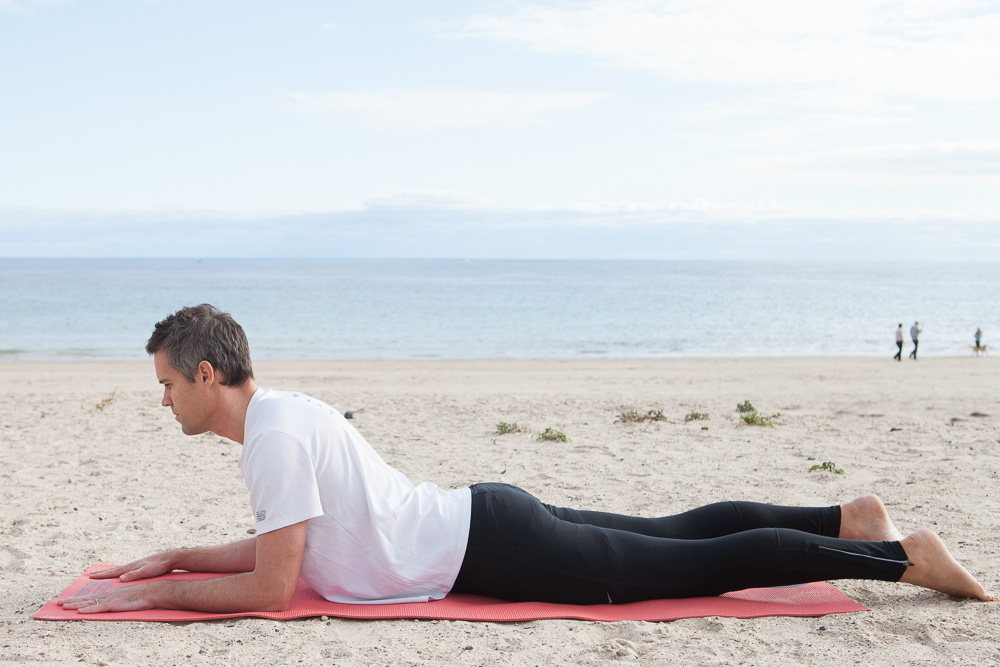
If you have a flexion related disc problem, sphinx pose (see picture) can be a very useful pose to decompress the spine.  It can be nice to rest here for 5-10 minutes with a heat pack across your lower back to stimulate the blood flow. 

Upward dog often seems to jam up the facet joints and is best avoided in the short term if you have lower back pain.  


Now it's your turn. 

What has been your experience in dealing with lower back pain during Yoga?

Please share your tips and constructive advice...


Research Update - Benefits of Foam Rolling

What is the Evidence for using a Foam Roller?

Foam rolling is a method of self-myofascial release that can be used all over the body to improve flexibility. Research (Junker and Stogg 2015) suggests 4 weeks of foam rolling the hamstring three times per week was enough to produce a significant improvement in hamstring flexibility.

Foam rolling has also been shown to decrease muscle soreness after intense exercise (Pearchey et all 2015). The participants in this study foam rolled for 20 minutes immediately after a bout of intense exercise and then again 24 and 48 hours after. They experienced significantly less muscle soreness compared with a control group. Researchers believe foam rolling may trigger a release of the pain relieving hormone oxytocin.

Chan (2014) found that self-myofascial treatment, in addition to home exercises, was found to reduce cortisol levels and increase heart rate variability. This indicates an activation of the para-sympathetic nervous system, crucial to healing, optimal recovery and decreasing stress.

Conclusion

Using a foam roller regularly will keep your musculoskeletal system healthy.

Aim to use your foam roller on a daily basis, spending 1-2 minutes before a workout and 10-20 minutes after an intense bout of exercise to improve your flexibility, reduce soreness and improve recovery times. Rolling the upper back every day can help maintain spinal flexibility.

The roller helps in 3 ways:
1. improves flexibility
2. improves core strength
3. activates the para-sympathetic nervous system (reduces stress and enhances the body's healing ability).  

Powerful stuff, if you know how to do it right!


Research links:

The foam roll as a tool to improve hamstring flexibility - Junker and Stogg

J Strength Cond Res. 2015 May

Foam rolling for delayed-onset muscle soreness and recovery of dynamic performance measures. Pearchey et al (2015) Journal of Athletic Training 

Short-term effects of self-massage combined withhome exercise on pain, daily activity, and autonomicfunction in patients with myofascial paindysfunction syndrome Chan et al 2014

--

5 Ways You Could Be Using Your Foam Roller All Wrong

Using a foam roller can be a valuable way to improve your flexibility, athletic recovery and relaxation. (Want to know how to use a foam roller? Start here.) Take care to avoid these common mistakes:

1. Holding your breath

Holding your breath activates the sympathetic nervous system. This sends a message to your brain that there is a perceived threat in your body. Your body reacts by increasing heart rate and blood pressure as well as causing muscles to tighten and constrict — the exact opposite of what we want to happen.

While rolling, keep breathing regularly (breathe in for five seconds and out for five seconds approximately). By focusing on your exhalation, you activate the parasympathetic nervous that activates the body’s healing mechanism.

2. Rolling the IT band too intensely

The iliotibial band (ITB) is a fibrous tendon that runs up the outside of your thigh. Often it becomes inflamed after too much walking, running or hiking downhill. It contains many sensitive nerve structures and does not respond well to heavy, prolonged rolling.

The ITB reacts better to a few quick rolls, with body weight partially supported by your arms and other leg. The fleshy, muscular part of the ITB called the tensor fasciae latae (TFL, which runs up to the front of the hip) can often give you better results, along with rolling the quads, hamstrings and calf muscles.

3. Rolling your lower back

The body contains many joints, each of which has a specific job to do. The lower back is generally designed to be a strong stable core, from which other body movements can take place. There is no need to roll the lower back, as true stiffness is rarely the problem. More commonly the hips and upper back are tight, which then leads to compression through the lumbar spine.

4. Using bad posture

Foam rolling involves lots of different positions. Good body awareness and core stability are important to ensure you don’t injure yourself. In general, try and maintain a neutral spinal zone.

5. Rolling too quickly over major muscle groups

Slow, focused rolling is better for big muscles like the quads, hamstring and calves. Pay attention to your body and if you come across any particularly tight areas you can hold the pressure there for up to 30 seconds, as the muscle slowly releases. If the muscle doesn’t release or you feel any unusual symptoms like pins and needles, it may mean you are compressing a nerve. Please consult with your physiotherapist for further advice.

Click HERE for more information about our next Introductory Foam Roller Workshop