Knee

3 Tips To Running Without Knee Pain

Knee pain is really common among runners (about 40% will experience in a given year). 

So...rather than ignoring it and hope its goes away...here are 3 simple tips to help you keep your knees tracking smoothly and efficiently :

1.  Increase your cadence

Research suggest a small increase in your cadence (increasing step frequency by 5%) leads to a decrease in ground reaction force

Essentially, shortening your stride takes the stress off your legs and taps into your 'spring system' that is more efficient and less impact on your knees. 

The average runner's cadence is approx 160 steps per minute, and the research shows increasing to 170-180 can make a big difference.

Be warned though, this style of running will put a greater load on your cardio-vascular system - so you may need to keep an eye on your heart rate and take breaks as needed.

Some GPS watches track your cadence.

Otherwise you can download a free metronome to help you.  I like to use the metronome for a few minutes at the start of a run to help get my rhythm in place...starting at 170bmp and then up to 180bmp for a few minutes.


2.  Strengthen your glutes

"Strong glutes makes everything better" - Perry Nickelston

"Strong glutes makes everything better" - Perry Nickelston

The glutes are the main protectors of the knee.  When they become weak or inhibited they allow excess pressure on the knee joint and the muscles that surround it such as the ITB. 

When running, the glutes should take most of the load.   The gluteus maximus is the biggest and most powerful muscle in the body.  But in the presence of pain, injury or excessive sitting it 'switches off' and other muscles are forced to compensate.

Here are some of our favourite exercises to get your glutes back online and functioning:

  • clam

  • bridge

  • single leg bridge

  • reverse lunge

  • squats

  • split squats

If you think your glutes might need some work...then you should join our weekly Pilates class...click here to reserve your place (spots are limited). 
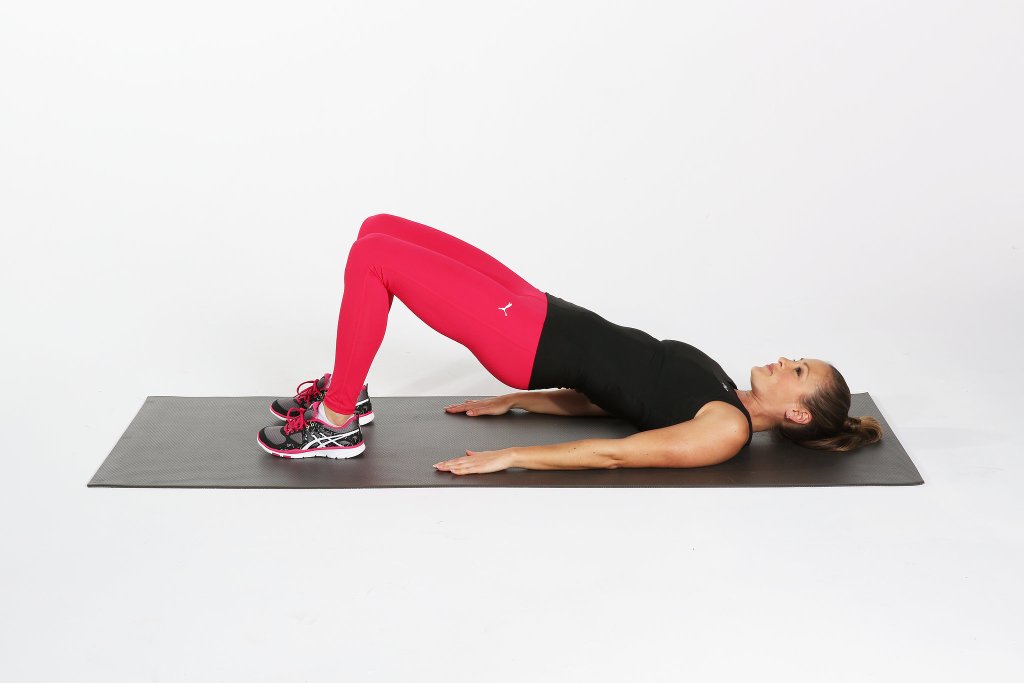
Bridge:  Tuck the pelvis under lift your hips - look for a straight line between knees, hip and shoulders.  Breathe and relax the shoulders.  Hold for 1 minute x 3 sets.

Bridge:  Tuck the pelvis under lift your hips - look for a straight line between knees, hip and shoulders.  Breathe and relax the shoulders.  Hold for 1 minute x 3 sets.

3.  Foam roll AFTER you run

The muscles in your legs have to work pretty damn hard during a run - absorbing up to three times your body weight every time you land. 

Muscles such as the outer quads, ITB, calf, hamstrings and adductors can get tight and knotted up and have a lot of trouble relaxing back to 'normal' after a hard run. 

This tightness can lead to increased pressure on the patella (knee cap) and cause ongoing tracking issues with the knee. 

A quick full body tune-up can be completed in less than 90 seconds (see video below) and help iron out tight spots around the knee.  

Of course, if you are tight in a particular area, you should spend longer working out the knots.

Is Pain or Injury keeping you from being as active and healthy as you want?

The Healthy Knees Workshop - learn more

Why Knee Pain Gets Worse With Lunges And How To Ease It

The Resilient Knee Project is an innovative solution for people with chronic knee pain that empowers individuals to self-manage their pain and most importantly, get them back to enjoy the physical and mental benefits of running.

Founded by Daniel O’Grady, dedicated professional with first hand experience of overcoming knee pain and running the NYC Marathon, the project aims to be a world leader in restoring people’s confidence in their knees and get back to doing what they love.

Is The Resilient Knee Program right for you?

Start a conversation with our new Chat Bot HERE

Why knee pain gets worse with lunges and how to ease it

Knee pain while performing lunges is very common and every day in the clinic I hear people say that performing lunges aggravates their knees. 

I find my patients either:

  1. Push through the pain and keep going with them, ending up with an injury or

  2. Stop doing them altogether and miss out on the many benefits lunges can bring.

In this post, I will show you how performing lunges can place excessive stress on the knee and a give you a simple way to avoid this from happening. 


What happens during a typical lunge?

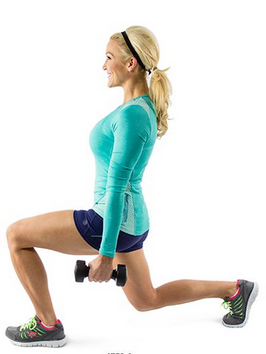
See the picture above where the front knee travels along way forward past the ankle.

This is not a problem if you don't have knee pain. 

BUT, if you do have knee issues, there is a high chance this movement will aggravate your pain.

Doing a forward lunge in this manner plays into a common muscle imbalance that many of us suffer from - over-active quadriceps and hip flexors at the expense of the gluteals

Walking lunges are particularly bad at encouraging this quads dominance, as the center of gravity is traveling in forwards direction.

Quick anatomy review:

The hip flexors (left) that attach the lower back to the hip and the quads (right) that attach the hip to the knee. 

The effect of over-loaded quads:

Due to the fact that we are sitting, driving and walking a lot, our quads and hip flexors are naturally prone to tightness and overuse. 

Adding further stress in the form of lunges can push them over the edge.

When a muscle is repeatedly contracted in a shortened position, eventually this will lead to development of knots or trigger points in the muscles fibers. 

This reduces the flexibility in the muscle and also gives rise to referred pain, that often is felt in the knee.

Referral pattern of the quads:

When the quads develop trigger points (knots in the muscle fibers) they have a characteristic referral pattern. 

See below:

So....instead of the forwards lunge, try this simple but powerful change:

The Reverse Lunge

To obtain the benefits of a lunge, without putting your knees at risk, follow these 3 steps:

Step 1:

Maintain a neutral spine (think gently tucking the pelvis under and activating the core muscles) and then taking a big step back. 

You should feel a gentle stretch in the front of the leg that steps back (upper quads and hip flexors). 

Tip > you can use a foam roller to counter balance the backwards motion.

Step 2:

The key to the reverse lunge is maintaining a vertical tibia in the front leg.

At the bottom of your reverse lunge, take a quick look at your tibia bone (lower leg from knee to ankle) and it should be in a vertical position i.e. perpendicular to the ground. 

Keep your center of gravity back and over your hips. 

In this position, your glutes should be activating strongly.  The quads should also be working, but not excessively. 

The nice thing about the reverse lunge is that if you push back to far, you will only work the glutes harder, which is never a bad thing.

Progression: Reverse Lunge with medicine ball

Progression: Reverse Lunge with medicine ball

Step 3:

Push yourself back up to the start position using your glutes to lift yourself forwards.

If you can do ten on each side without much trouble, adding some weight in the form of a medicine ball or kettlebell is a great idea. 

Aim to complete three rounds.

Between sets you can do some bridges or step ups which will also target the gluteal muscles.

If you're sore in the glutes the next day, you know that you're on the right track!

Please have a go and let me know how you get on in the comments below.

Download the The Healthy Knees E-Book - now on special !!

Is Knee Pain or Injury keeping you from being as active and healthy as you want?
ONLINE PHYSIOTHERAPY CONSULTS

Get To Know Your Muscles - TFL (Tensor Fasciae Latae)

Author: Daniel O'Grady is a Physiotherapist in Adelaide, Australia.

Most people know about their ITB (Ilio Tibial Band)  that runs on the outside of the thigh; but not as many are familiar with the strip of muscle that joins the upper part of the ITB to the pelvis. 

This small muscle is known as the TFL (Tensor Fasica Latae). 

If you’ve ever had problems with your knee, hip, lower back, calf or achilles, chances are you have some unresolved tightness in your TFL.


QUICK ANATOMY REVIEW:

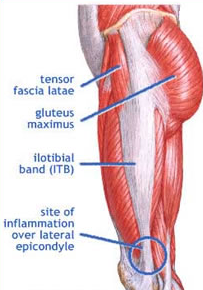
As you can see in the picture, the ITB has upper attachments to both the gluteals and the TFL.  Any dysfucntion/weakness in the glutes means that the TFL needs to work proportionally harder.  Gluteal inhibition is common - especially if you spend a lot of time sitting.


PALPATE THE TFL ON YOURSELF:

To feel the TFL, place your finger on your front of your pelvic bone.  Slowly move down and to the outside of the thigh until you feel a ropey muscle that is the the width a finger.  It may be tender to touch.


FUNCTION:

The TFL is a hip flexor, abductor and internal rotator.  It works in conjunction with the gluteus medius and gluteus maximus to stabilise the leg during the stance phase of walking and running.  The TFL anteriorly rotates your pelvis.  Functionally, the TFL is part of the Lateral Line and the Spiral line, according to Thomas Myers in his book Anatomy Trains.

The Lateral Line

The Lateral Line

The Spiral Line

The Spiral Line


SYMPTOMS:

Overload of the TFL can lead to pain and tightness in the front of the hip.  Very common is also pain and tightness in the outer part of the knee and into the ITB.  This is most noticeable when walking or up and down stairs/hills. 

Other symptoms:

  • knee and hip pain (especially outside)

  • the lower back and SIJ

  • upper back

  • calf and achilles

As the TFL pulls the head of the femur bone forwards, chronic increased tone is one of the prime causes of hip osteoarthritis and degeneration. 

HOW THE TFL BECOMES OVERLOADED:

The TFL becomes overloaded with repeated use in the following situations:

  • excessive sitting, driving, kicking

  • walking and running (especially uphill and downhill)

  • cycling, swimming, kayak/canoe

  • meditating crossed legged in lotus position

  • sleeping in the fetal position

  • standing with a swayed back and wearing high heels too often

TREATMENT:

Physiotherapy assessment will involve a comprehensive movement assessment to determine the cause of your TFL issue.

Short term treatment such as soft tissue massage and dry needling is very helpful, while long term building gluteal and core strength is critical to prevent a relapse.


TRIGGER POINT DRY NEEDLING:

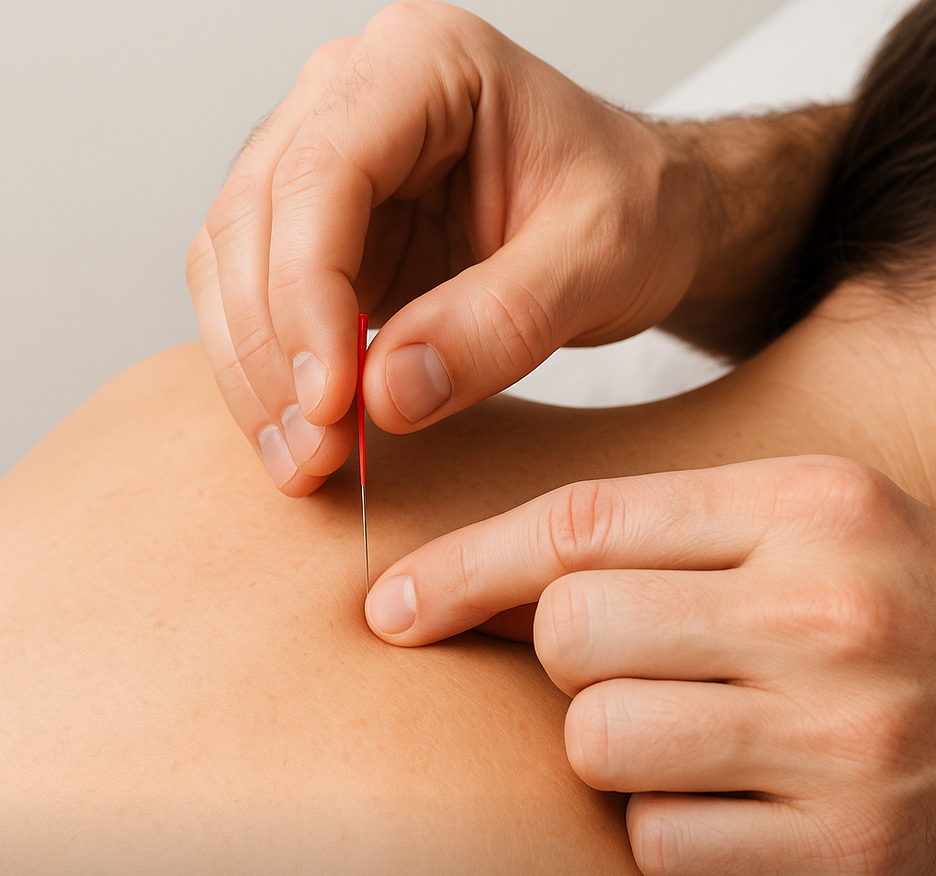
Tightness and shortening of the TFL responds well to dry needling, which can de-activate the trigger points (knots in the muscle) that can form in chronic cases.  The benefit of dry needling is that it can reach the deep fibers of the muscle and lead to a quicker resolution of symptoms.  Dry needling is certainly an unusual feeling, but definitely beats 15 minutes of deep painful massage in that area.


SELF-CARE TIPS:

  • apply heat to the front of your hip 10 minutes each day

  • avoid sitting cross legged

  • avoid walking and jogging uphills and on sloped surfaces in the short-term

  • ensure your shoes are not overly worn

  • sleep on stomach or side with pillow between knees

  • when running - avoid over-striding and endure proper warm up and cool down

  • use cruise control on long car trips to stretch the legs


GRADED EXERCISE PROGRAM TO ADDRESS TFL OVERLOAD:

PART 1 STRETCHES:

FOAM ROLLER ITBRegulate the pressure with your arms and top leg, so pain is less than 5/10.

FOAM ROLLER ITB

Regulate the pressure with your arms and top leg, so pain is less than 5/10.

FOAM ROLLER QUADSGo harder along the quads. Keep breathing!

FOAM ROLLER QUADS

Go harder along the quads. Keep breathing!

HIP FLEXOR STRETCHFeel the stretch in the front of your hip as you tuck the pelvis under gently

HIP FLEXOR STRETCH

Feel the stretch in the front of your hip as you tuck the pelvis under gently

FOAM ROLLER TFLAngle your body across the TFL and roll it with medium to light pressure

FOAM ROLLER TFL

Angle your body across the TFL and roll it with medium to light pressure

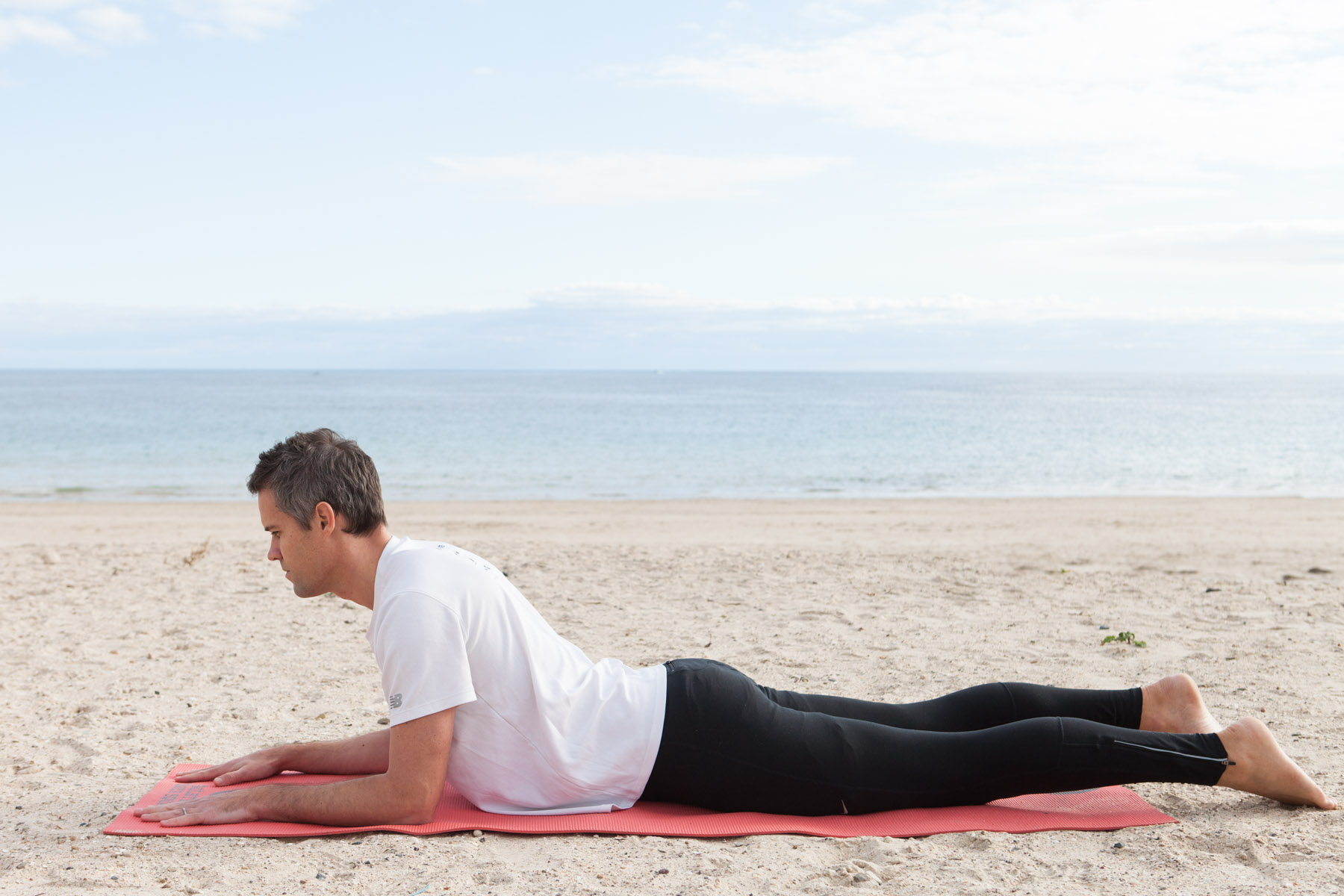
PRONE EXTENSION COBRA DECOMPRESSIONRelax on your forearms, let your hips release at the front. Breathe through the diaphragm

PRONE EXTENSION COBRA DECOMPRESSION

Relax on your forearms, let your hips release at the front. Breathe through the diaphragm

PART 2 STRENGTHENING:

The goal is to strengthen and support the muscles around the TFL

BRIDGEFeel a stretch in the front of your hips while your glutes activate in the back of the hips

BRIDGE

Feel a stretch in the front of your hips while your glutes activate in the back of the hips

CLAM SHELLEnsure hips stay facing the front and you feel the gluteus medius (back of the hip) activating

CLAM SHELL

Ensure hips stay facing the front and you feel the gluteus medius (back of the hip) activating

SINGLE-LEG BRIDGEKeep the bridge high as your transfer your weight to each side. Keep activation through the glutes

SINGLE-LEG BRIDGE

Keep the bridge high as your transfer your weight to each side. Keep activation through the glutes

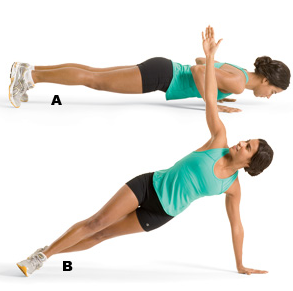
PUSH-UP TO SIDE-PLANKActivate the obliques as you twist into side plank. Try x3 on each side.

PUSH-UP TO SIDE-PLANK

Activate the obliques as you twist into side plank. Try x3 on each side.

PLANKFeel the abdominals support your body. Hold 30 seconds. Keep breathing!

PLANK

Feel the abdominals support your body. Hold 30 seconds. Keep breathing!


PART 3: POSTURE / NEW MOVEMENT PATTERNS

For many people, the TFL becomes the muscle that is always switched on and over-active.

Try these movements, focusing on keeping your core and gluteals engaged.
STANDING PELVIC-TILTSUse the abdominals to gently tuck the pelvic under. Keep the shoulders relaxed and breathe through the diaphragm. x10 per hour.

STANDING PELVIC-TILTS

Use the abdominals to gently tuck the pelvic under. Keep the shoulders relaxed and breathe through the diaphragm. x10 per hour.

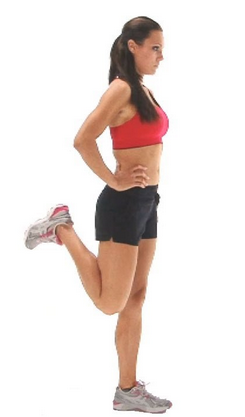
STANDING HAMSTRING CURLSKeep the pelvis tucked under and abdominals engaged as you bend the knee by activating the hamstring. Keep the knees aligned during the entire exercise. 3 x10 each side.

STANDING HAMSTRING CURLS

Keep the pelvis tucked under and abdominals engaged as you bend the knee by activating the hamstring. Keep the knees aligned during the entire exercise. 3 x10 each side.

REVERSE LUNGEFeel the stretch in the front of your left hip as you stretch back and drop the knee towards the ground. Keep your spine straight while gently tucking your pelvic under. x10 each side.

REVERSE LUNGE

Feel the stretch in the front of your left hip as you stretch back and drop the knee towards the ground. Keep your spine straight while gently tucking your pelvic under. x10 each side.

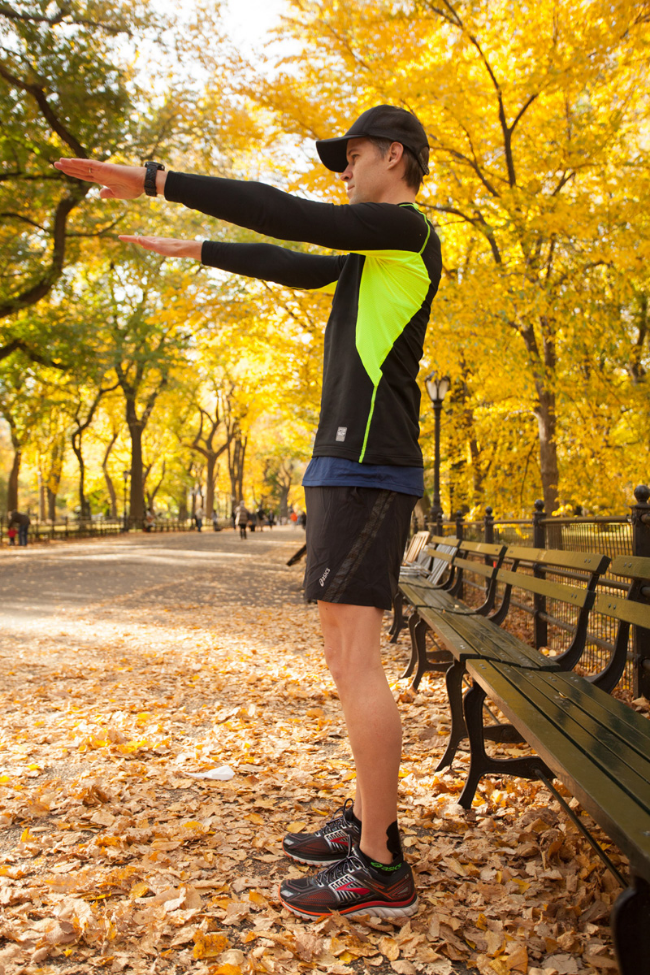
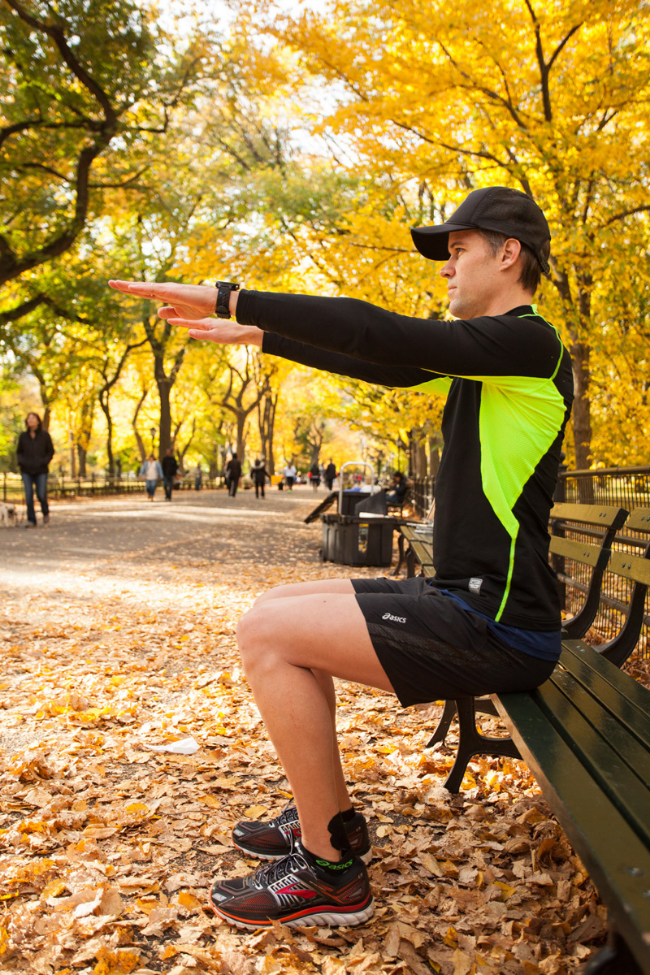
SIT TO STAND SQUATSFocus on activating the glutes and core as you come up into standing by gently pulling your pelvis under.

SIT TO STAND SQUATS

Focus on activating the glutes and core as you come up into standing by gently pulling your pelvis under.

Stick your butt out as you slowly sit down, keeping your feet and toes in contact with the ground. Repeat 3x10

Stick your butt out as you slowly sit down, keeping your feet and toes in contact with the ground. Repeat 3x10

Enjoyed this blog post?

Donate