Pain

Deepening our Understanding of Pain

Whilst at first thinking hard about pain can give you a bit of headache, doing a bit of hardwork now could well save you lots of unnecessary stress and excessive pain later on.

So you may need a nice cup of tea or coffee to get through this blog - but I promise it will be worth it !

Warning - for most people this isn’t an easy read, or easy to understand at first - that’s completely OK!

To learn about these things is not a standard part of physiotherapy currently.

But these are important conversations to have - as having accurate up to date knowledge is a big part of genuine recovery.

So if you are open to learning and being patient - you will most probably end up knowing more about pain that 95% of doctors and health care professionals, who by a large and stuck in the one-dimensional view of pain that is called the Biomedical Model (that states all pain must arise directly from tissue damage in a linear relationship).

OK, here we go….

Re-framing Pain as an Emergent Process

Pain is something we all experience and it often becomes a source of frustration and anxiety when it refuses to subside.

Whether acute or chronic, pain has a way of affecting our lives and pushing us to seek relief.

But instead of trying to attack, suppress or eliminate the pain…. what if we re-framed the pain? What if we changed the way we thought about the problem?

Rather than a simple mechanical response (damage = pain), we could view it as a complex emergent process (sensation + emotion + metabolic heath + past history + past expereinces + anxiety about the future etc = pain

By doing so, we open ourselves up to the fascinating intricacies of pain perception and potentially find new ways to address it. You gain empowerment over the pain.

Pain as an Emergent Phenomenon

The first step in re-framing pain is to understand that it is always an emergent phenomenon.

Emergence, in this context, is a concept borrowed from complex systems theory.

It implies that pain doesn't arise from a single source but rather results from a complex interplay of factors.

Let's break it down:

  1. Bottom-Up (Physiological Sensation): The physiological aspect of pain begins with the actual sensation. It's the raw data sent from the site of discomfort to our brains, signaling that something isn't right.

  2. Autonomic Nervous System (ANS) and Heart Rate Variability (HRV): Our body's autonomic nervous system, which regulates functions like heart rate and digestion, plays a crucial role. Changes in heart rate variability can affect pain perception and contribute to its complexity.

  3. Past Experiences: Our personal history with pain and related emotions can influence how we perceive and respond to it. Past traumas or experiences can amplify or diminish pain signals.

  4. Top-Down Influence: This refers to the cognitive and emotional aspects of pain. Our thoughts, beliefs, and emotions can either amplify or dampen the pain experience.

Examples of Emergent Systems

To better grasp the concept of emergence, consider everyday examples like making coffee, baking, gardening, or listening to the sound of an acoustic guitar.

These activities involve numerous elements coming together in unpredictable ways to create a unique experience.

Similarly, pain is not a straightforward cause-and-effect relationship but always a complex amalgamation of factors.

Emergent Complex Systems vs. Linear Mechanical Systems

It's important to recognize that emergent complex systems, like pain, behave differently from linear mechanical systems.

Linear systems produce predictable, proportional results.

In contrast, complex systems exhibit nonlinear behavior, leading to outcomes that may not be proportional to the inputs.

This nonlinearity makes pain a highly variable and individualized experience.

The good news!

Whilst the above few paragraphs may sound very complex, that is actually a GOOD thing!

If you notice yourself feeling a bit anxious, frustrated, confused or overwhelmed - that is a great sign and very normal.

When we start on a new road of learning - there is an initial feeling of resistance as our systems are wired to avoid feeling overwhelmed and would much prefer simplicity.

Amongst the confusion, if you feel just a tiny bit of curiosity to learn more - that’s a great achievement.

The bottom line is - Humans Are Complex Systems.

And that complexity (counter-intuitively) opens the door to non-linear improvements in the way our bodies function (and in particular our pain levels).

In simple words when we stop ‘chasing pain’ at a mechanical level, we can be open to more simple, intuitive natural ways of healing.

You don’t have to wait until you get ‘stronger’ or ‘more flexible’ or ‘looser’ until you get out of pain.

Conclusion

Re-framing pain as a complex emergent system allows us to embrace its intricacies rather than anxiously avoiding them.

By recognizing that pain is not a simple linear response, we can explore more holistic approaches to managing and treating it.

This shift in perspective encourages us to consider the multifaceted nature of pain, incorporating both physiological and psychological aspects into our understanding and treatment strategies.

In doing so, we open doors to more comprehensive and effective pain management solutions that respect the complexity of the human experience.


Has this blog sparked any curiosity? Please feel free to leave a comment and I’d love to hear your thoughts.

For more reading - this is a good starting point

The Complexity Model: A Novel Approach to Improve Chronic Pain Care

Affordance-based practice: An ecological-enactive approach to chronic musculoskeletal pain management

Has the pain neuroscience education (PNE) pendulum swung too far?

Pain neuroscience education (PNE) is a form of education that focuses on teaching people about the neuroscience of pain, including how the nervous system processes and perceives pain.

PNE aims to help people better understand their pain and how it is affected by various factors such as emotions, thoughts, and behaviors.

It is difficult to determine whether the pendulum has swung too far in terms of PNE, as it can be a useful tool in helping people better understand and manage their pain.

Having witnessed the rise of PNE in the world of Physiotherapy in the past 20 years, I can’t help but feel it has almost taken over and created a set a dogmatic clinicians who believe that counseling someone in pain to re-wire their thinking and perception is the holy grail in treatment.

In reality, what PNE focused session looks like is a patient presents to a clinic and is given very little in the way of hands on assessment and treatment. The patient does not feel properly listened to or validated. The patient receives a monologue of ‘pain-splaining’ directed at the patients presumed misdirection beliefs and perceptions. The patient leaves in disbelief and concerned about what exactly is Physiotherapy profession stands for and confused at to what it actually does in terms of adding value to their lives.

This is an obviously extreme example, but hearing from some patients first hand, as well as reading about first person narratives, this theme of patient disillusionment is unfortunately on the rise.

Potential harms of PNE focused approach

In the genuine attempt to help, some clinicians may inadvertently dismiss or minimize a person's pain experiences or symptoms, often by citing research or scientific evidence. This can be harmful to the person experiencing pain, as it can invalidate their feelings and experiences and may cause them to doubt their own perceptions.

Another danger is that it can create a rift between the person in pain and their healthcare provider, leading to a breakdown in the patient-doctor relationship. This can lead to a lack of trust and may make the person in pain less likely to seek medical attention in the future.

Another danger of the PNE focused approach is that it may lead to a lack of appropriate treatment or inadequate care. If a healthcare provider dismisses a person's pain experiences or symptoms, they may not provide the necessary treatment or support, which can lead to a worsening of the person's condition and an increase in their suffering.

Unfortunately we may only see the downstream effects of this approach in the years to come.

If there is enough patient disillusionment I see the Physiotherapy brand at risk, with an increase in mistrust of health care professionals.

So then… what is the current research showing about PNE?

Some of the great hopes about the new pain revolution unfortunately haven’t quite lived up to the initial optimism.

Take the RESOLVE study for example, that stated:

“Central nervous system-directed interventions constitute a completely new treatment paradigm for chronic low back pain management. The results have the potential to be far reaching and change current physiotherapy management of chronic low back pain in Australia and internationally”.

These are some big statements and certainly suggest that there are some big changes coming.

The results of the RESOLVE study weren’t exactly ground-breaking, with only small trend toward a positive impact from PNE.

Another study comparing intensive pain education with placebo in people with acute lower back pain showed no clinical benefit, with authors concluding:

“Adding 2 hours of patient education to recommended first-line care for patients with acute low back pain did not improve pain outcomes. Clinical guideline recommendations to provide complex and intensive support to high-risk patients with acute low back pain may have been premature.”

A new recent paper came out showing no changes in outcome comparing Cognitive Functional Therapy with Manual Therapy and core exercise.

Before you accuse me of being anti-PNE, I am well aware of many promising research around PNE and their is definitely good work being done by good people.

But I feel like the negative studies that don’t support the new paradigm get conveniently swept under the carpet and the sacred PNE narrative largely goes unchallenged, especially by clinicians in Australia, where PNE has dominated through large amounts of government research spending.

I can absolutely see the value in good education around pain mechanisms, but I’m just not sure the public is responding in the positive way we would have hoped.

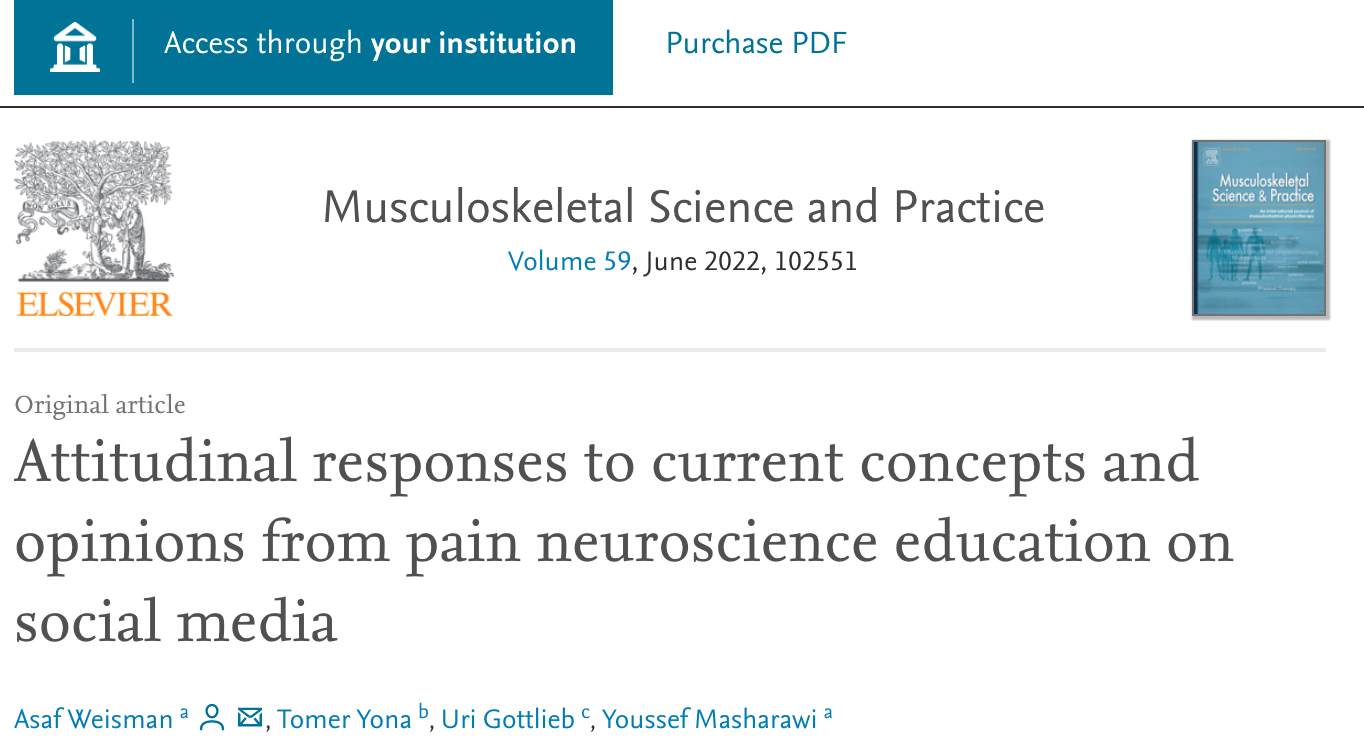
One of the biggest research papers to ever be conducted on patient perception of PNE was published in recently (Weisman et all 2022) showing,

“People with persistent pain tend to express negative attitudes to PNE statements”.

Another research paper that came out in 2021, co-authored by Lorimer Mosely is quoted as saying,

“It is important to combine PNE with other treatment modalities such as exercise and even manual therapy”.

As this paper importantly suggests, it is important to recognize that PNE is just one aspect of managing pain and that it should be used in conjunction with other approaches, such as physiotherapy and medication, as appropriate.

It’s important to recognize that PNE is not a one-size-fits-all approach and that it may not be suitable for everyone.

Some people may find it helpful in managing their pain, while others may not respond as well.

My belief is that all health care professionals should be highly informed about pain neuroscience and how their own thoughts, beliefs and actions can effect the patient, but we may need to re-evaluate how much specific education we try to impart, based on the needs of the individual in front of us.

For patients, it important to work with a healthcare professional that you trust to determine the most appropriate treatment plan for managing pain.

If something doesn’t feel right, you don’t see any significant improvement or you aren’t getting a combination of effective manual therapy, exercise and education based on your goals, please seek further help elsewhere.

What does the future hold?

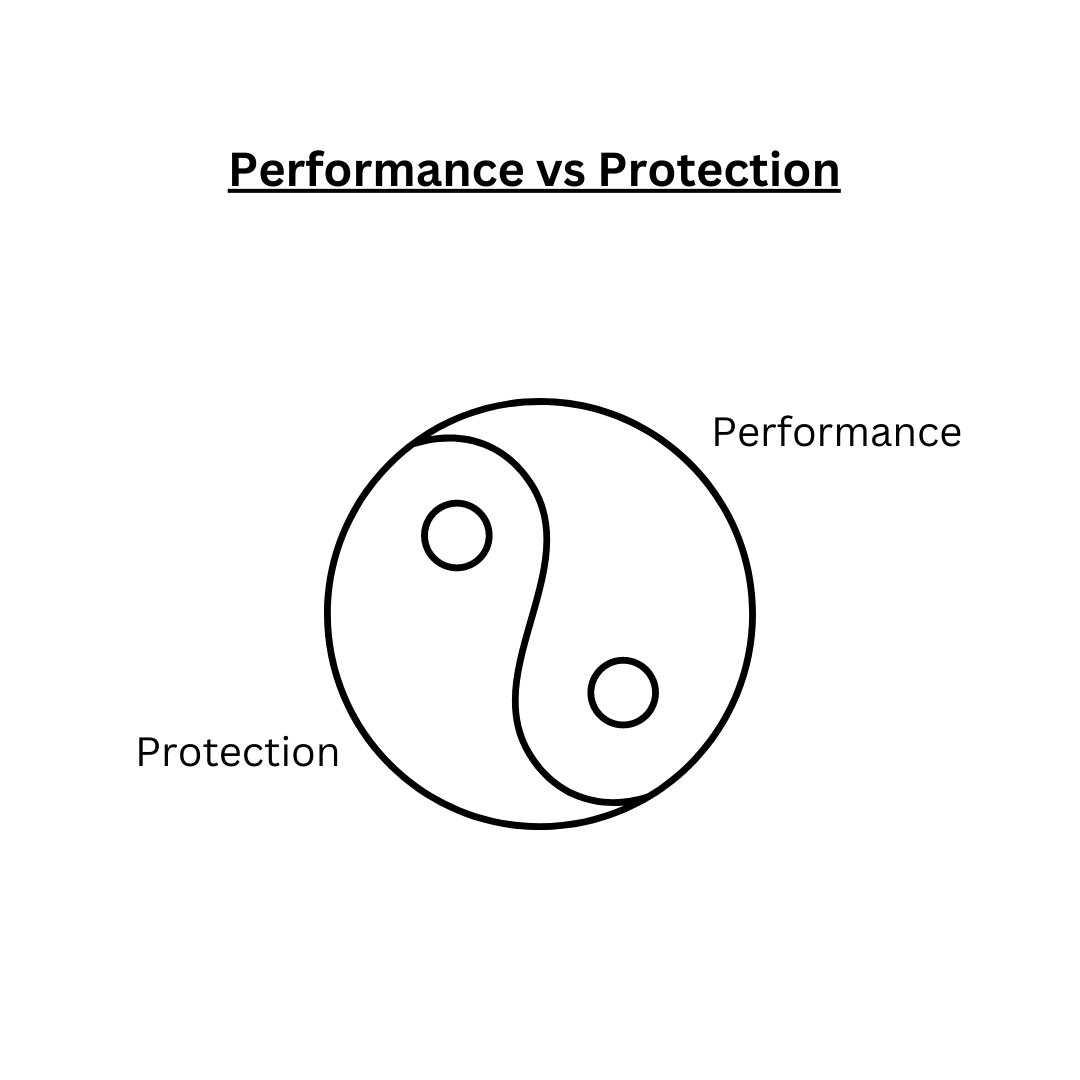
I must say a big thanks to Luke Bongiorno and the NOI Team for their recent Masterclass presentation which went into great detail into the relationship between Protection and Performance.

The premise of the Masterclass suggested that Protection and Performance are competing priorities in the body and you need to work on both to get your body to an elite level.

For elite level performance, it is the special coach / athlete relationship that underpins an exploration of pushing the boundary of performance whilst acknowledging the background and sometimes subtle (but occasionally bold) protective strategies is what will ultimately limit the expansion of physical capacity.

It takes work to be able to understand and listen to the language of the Protective system and it is the elite athletes, through time and experience really learn to listen to their bodies. They are experts in their bodies and being able to listen to the relevant signal and ignore the noise.

A great example that springs to mind is the recent Australian marathon record, set by Sinead Diver.

At age 45 and competing in her 14th marathon, Sinead made a few changes to her race build-up, explaining that she tempered her training, for the first time.

Rather than pushing herself to the extreme, this time Sinead was weary of over-training.

Sinead:

“If I felt tired, like on a couple of Sunday’s I had a planned to do a pick up and I just thought…

‘I’m not feeling it today, I need to be careful and know that I don’t have to do it just because it’s on my plan’.

So I think I was a bit smarter during this training block”.

Having full confidence to train hard AND smart is skill that takes years to master, especially for marathon runners.

Importantly, rising to the top isn’t simply about using a ‘no pain, no gain’ approach, but actually respecting the body and allowing periods of plateau or even de-training, accepting that this is a normal part of the process.

To finish, I will leave you with an excellent quote in a review by Adrian Louw:

“In this Viewpoint, we argue against PNE as a stand-alone treatment intervention for individuals with persistent pain.

PNE has little to no meaningful effect on pain as a stand-alone treatment.

Physical therapists must focus on movement and use PNE, along with other adjunct interventions, to facilitate a movement-based approach”.

My vision

I think it is really challenging to try and ‘explain pain’ to people who are already in pain. It can be done, but it does run a real risk of backfiring and damaging the patient-therapist relationship.

A more utopian vision would be to make up to date, evidence informed information knowledge about our bodies function a part of our school curriculum, and we learnt how to take care of them - just like a dentist encourages her clients in oral health.

This would include education about how our bodies work with a focus on ‘use it or lose it’ philosophy and trying to make incidental movement fun and socially engaging. Gamifying movement through innovative use of technology is also a promising development.

In terms of pain education, having read, Pain and Perception book published by NOI, I would love to see this book promoted by local book stores and libraries - specifically for people who aren’t in pain.

Some useful ideas packaged in a fun and innovative way would be a good way to well upstream of our current pain epidemic.

Your thoughts?

I’d love to know your thoughts in the comments below - what has been your experience?

Is there a perfect posture?

“Our bodies love to relax” - Professor Peter O’Sullivan

.

A really interesting conversation where the topic of ‘good’ posture while sitting is discussed.

.

(Important) take home message

Don’t let anyone tell you there is a thing such as a ‘perfect’ posture.

.

Regular change of position (including sitting back and relaxing in your chair) is an important part of having a healthy spine Listen to your body for its cue that it’s time to move.

.

If you’ve had persistent back pain this podcast episode is absolute must!

My Pain Story - Joletta Belton

This is a brilliant insight of Joletta’s story of how she developed chronic pain and the long journey she took to a place of healing.

Joletta shares her wisdom and of the insights she gained from a roller coaster ride that started when she twinged her hip at work as a firefighter.

Hearing about her journey gives us all hope that there are solutions out there, and sometimes a shift in perspective and learning from the updated science of pain can be life changing.

PDF Download—> Joletta Belton: Explaining the Meanings of Pain, My Story

To hear more from Joletta, One Thing asked 10 experts in pain medicine to share the one thing they want people challenged by pain to know about.

View Joletta Belton’s response:


Go The Distance Challenge

Excited to take part in the #GoTheDistance Challenge. I’ll be running 200km in the month of October to help raise money to support people in chronic pain, particularly those in rural and remote parts of Australia. There is amazing work and research being done by Professor Lorimer Mosley & the research team involved at UniSA. My goal is to raise $500. If you would to donate, please see link below 🙏🏼

DONATE TO DAN'S CHALLENGE
Running(1).png