5 Tips for Preventing Back Pain While Working from Home

Guest blog post from Harper Reid

Back pain from sitting at a desk all day is a very common problem. It can be caused by incorrect posture, the wrong seating or simply from inactivity. Whether it’s mild or severe, back pain can make it difficult to work and go about your everyday life. This is why the best approach is to try and prevent it. Working from home gives you a bit more freedom than working in an office. This will be useful as you will see in the suggestions below.

Here are 5 tips to prevent back pain while working from home.

1. The Right Seating
One of the best ways to prevent back pain is to choose the right chair. Often working from an office you may not get to choose your furniture. This is one of the benefits of working from home.

You want to look for an ergonomic chair for your home office. This allows you to adjust the height, recline and armrests to offer the best support for your spine. You could also consider sitting on a Swiss exercise ball. This can help strengthen your leg and core muscles as you are actively working these muscles while balancing on the ball. 

2. Improve Your Posture
Bad posture is a key contributor to back pain. While having the right chair helps, that’s only half of it.

Keep your head and shoulders upwards and facing forwards. You want your knees to be at a 90-degree angle. Keep your feet flat on the floor and shoulder-width apart.

This will help support your back.

Another cause of back pain can be from holding the phone between your ear and shoulder too frequently. Try using speakerphone or an earpiece instead. This will prevent strain on your neck and back.

3. Take Regular Breaks
When working from home you have the benefit of being able to get up from your desk whenever you like.

You should be getting up from your sitting position at least once every hour for a minute or two.

Use this time to stretch, walk around the house, get a drink or snack, or step outside for some fresh air. These short breaks will go a long way in preventing back pain.

4. Exercise
Exercising is essential for keeping your body healthy, and can be very helpful in preventing back pain. Working from home makes it a lot easier to incorporate exercise into your daily work routine.

You can do stationary exercises at your desk to keep your body active. This can be simple exercises like stretches, leg raises, neck and shoulder rolls and torso twists. You could even keep a small lightweight dumbbell at your desk to get in a few arm curls. During your lunch break you could try doing some Pilates or yoga. These are gentle workouts that can help strengthen your core and promote good posture.

5. Healthy Sleep
Preventing back pain at work isn’t only about your work habits. Sleep also plays a crucial role. Bad sleeping posture can cause back and neck pain which can become exacerbated from sitting all day. The best sleeping position will depend on you, as not everyone is comfortable in the same position. The main thing is to keep your head, shoulders and hips in alignment. You’ll also need a comfortable pillow and mattress that naturally support your sleeping position.

Creating good habits when working from home will go a long way to prevent back pain. It doesn’t require a lot of effort, and being at home should make it easier to incorporate these tips into your work routine.  Not only will these tips help you avoid a sore back, they will also improve your overall wellness.


Author bio:

As a freelance content writer, Harper spends most of her hours sitting in front of her computer. She considers her ergonomic office chair and noise-cancelling headphones her two best friends. Discover more of her work on her personal blog.
Is there a perfect posture for sitting?

Is there a perfect posture for sitting?

In a word… NO.

Over the years, you may have been encouraged to adopt a ‘perfect’ sitting posture.

This may have involved a very straight spine with the head pulled back.

But if you look at the evidence linking posture and pain - there is surprisingly little high quality research to support the idea of a perfect sitting posture.

On the contrary, the researchers warned that attempting to maintain a perfect posture would actually require a higher level of muscle activity and could cause greater tiredness and discomfort.

Rather than try to find the ‘perfect’ posture, here’s three things that will help you more:

  1. Think about the time in the posture rather than trying to find the perfect posture

    Researchers found office based workers who experienced pain in the shoulder and neck muscles was more often caused by a lack of blood flow leading to a mild oxygen deficit in the muscle.

    Completely harmless, but with the potential to cause significant discomfort.

    Stop worrying about not having the perfect posture and instead take frequent stretching breaks.

    Try and maintain blood flow throughout the day by getting enough cardio-vascular exercise (30-60 mins per day).

    Sometimes short bursts of exercise works better if you’re in a sedentary job.

    Also try and incorporate ‘Movement Snacks’ into your day.

    You can download a free PDF with 20 exercise ideas below.


    FREE DOWNLOAD - 20 MOVEMENT SNACK IDEAS:

2. Don’t worry and stress over so called ‘bad’ postures such as slumping or looking down. Everything in moderation.

Some research actually showed sitting slumped in a relaxed posture could help decompress the lumbar discs.

It’s people with over-protection and underlying anxiety about injuring themselves that end up increasing the increased stress on their muscles and joints.

Listen to your body, be intuitive and curious about your body and the way it moves.


3. Perform body strength training exercises twice per week

General body strengthening exercises for 20-30 mins twice per week will provide a great foundation for your body.

You don’t need a gym, you can use your own body weight.

If you have some small weights at home, you can use them.

But even just body weight can be enough if you are doing a 7 minute workout.

For an individually tailored program, don’t be afraid to contact us to help achieve your goals.


How to develop mental resilience after an injury

We have an acronymn for the physical side of injury - RICE (Rest, Ice, Compression, Elevation) that works well and is easy to remember.

But the mental side of how you deal with an injury is arguably more important.

Our beliefs, attitudes and emotions about the situation can set the stage for effective healing to begin.

That is why we have come up with another version of RICE, a simple mantra you can go through in your head in less than a minute, and hopefully set the stage for a positive healing experience after an injury.

Screen Shot 2020-03-09 at 1.27.59 pm.png
  • Resilient - the human body is an incredibly resilient self-healing machine

  • Intuitive - allow space and openness to listen to the wisdom of the body

  • Capable - what’s your current capacity relative to the demands of your sport and life?

  • Equanimous - calmness and composure in a difficult situation

Please see below for a more detailed breakdown of each word.

I hope this information empowers you to lead a healthy and enjoyable life, with confidence in your body.

Dan

Warning: if you are unsure why you are getting pain, please ensure you consult with an appropriate health care provider.

Resilient

Our bodies our are incredibly resilient and robust.

Think of when you have accidentally cut yourself - and how quickly it heals within a few days, without you even thinking about it.

Our bodies are essentially powerful super healing machines - our job is to provide the best environment to support the process.

Find an exercise or movement that doesn’t aggravate your pain or injury and focus on that until you feel better, keeping your blood pumping and endorphins flowing.

Vulnerability and Fragility

One thing injuries can do is make us feel vulnerable and fragile.

Fearing further injury can lead us to over-protect (see below).

This can lead to less movement, in an attempt to protect the area from further damage.

It can also lead to increased muscle tightness by bracing to protect, which can lead to some compensations and stress in other parts of the body. 

course016-fear.jpg

Of course some rest and recovery is needed in the short-term.

At the other end of the spectrum, some people are really good at ignoring and pushing through their pain.

So where should we draw the line between too much and too little activity?

Monitoring your symptoms during exercise and for the 24 hours following can be very useful guide (see below).

Pain up to 5/10 is considered acceptable and to be expected.

26230254_1766419206721981_7449245514448806023_n.jpg

After an injury, it is natural to feel a little vulnerable.

But always remember you’re not fragile, weak or damaged.

If you’ve ever worried about degeneration or wear and tear, I would highly encourage you to read this book by Dr John Sarno. In particular the first chapter, titled ‘Structural Abnormalities Rarely Cause Pain’.

And if you need any more proof of the resilience of the human body, consider these stories:

aa162c000906524419739e7cd3ef54aa.jpg

Intuitive


Your Body Always Knows What To Do And It’s Always Trying to Communicate With You - Are You Listening?

It can be confusing when you have an injury… but if you allow some space and openness to listen to the wisdom of the body, you may have a better chance of hearing it’s message.

CoxD8WhW8AAlV3H.jpg

As for most things - a balance of logic and intuition goes a long way to getting you on the right track.

In this day and age with technology and devices so pervasive, it is becoming much more challenging to maintain strong lines of communication with the body.

We are living in our heads so much, the body has almost become an abstract concept!

Interoception

Interoception is the ability to sense internal messages coming from the body, such as heart rate, hunger, nausea and emotions.

Interoception also refers to being able to feel sensation coming from muscles such as tightness and tension.

61lLL3ybZJL.jpg

What is very interesting is that the researchers have shown that people who have had chronic pain, stress or trauma in their lives have a decreased interoceptive ability.

This means, they have a limited to ability to hear what they body is telling them and change their behaviour appropriately, setting the stage for injury to occur.


We all have the ability to increase the capacity of our internal awareness.

It takes an investment in time, practice and curiosity.

Tips to improve interoception:

  • develop a mindfulness based practice such as yoga, pilates, gym or running

  • spend time in nature walking barefoot

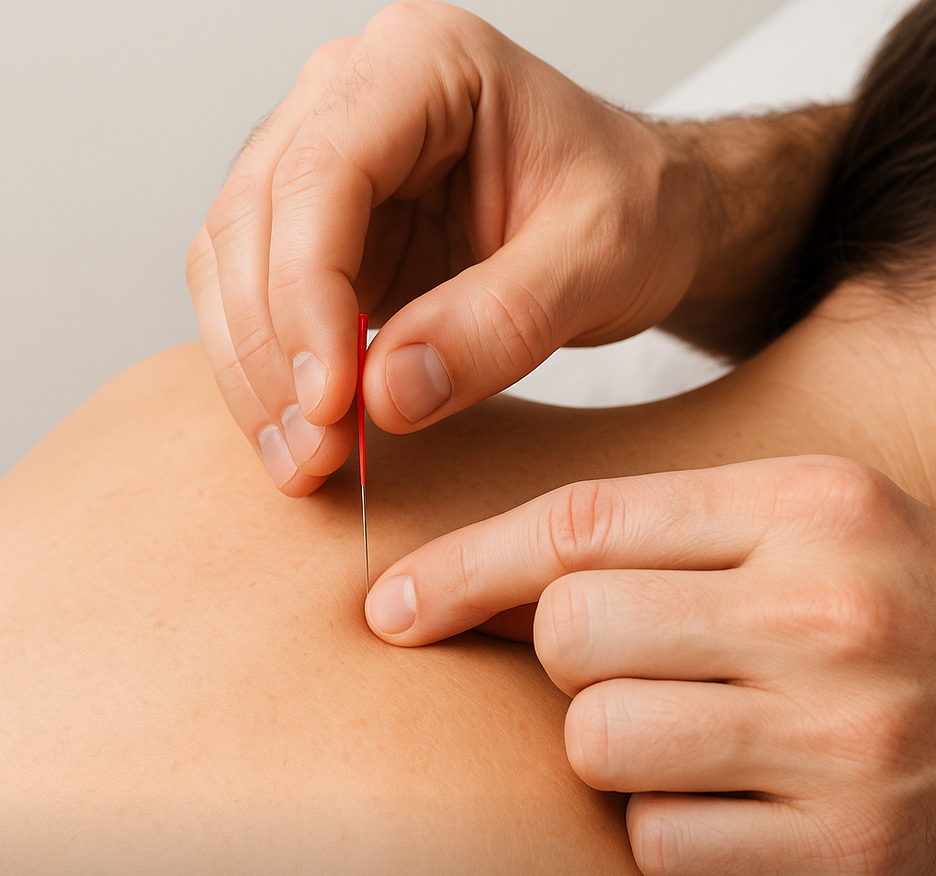
  • get regular massage / dry needling

  • use a foam roller / spikey ball

  • learn about heart rate variability training

    Just a warning, as you increase your interoception, you may become more acutely aware of things going on in your body. This is a normal process, but can be a little overwhelming at times.

    Working with a health care professional or teacher who is sensitive to your needs can help accelerate your powers of intuition and interoception in a safe way.

Never forget you know your body best and what works and what doesn’t.

Have trust and faith - there is a deep wisdom encoded into every cell in your body, based on millions of years of evolution.

For a really great read on interoception, click here.

Capable

Capability = CAPACITY minus DEMANDS

Always keep this picture in mind!

Always keep this picture in mind!

What’s Your Current Physical Capacity Relative to the Demands?

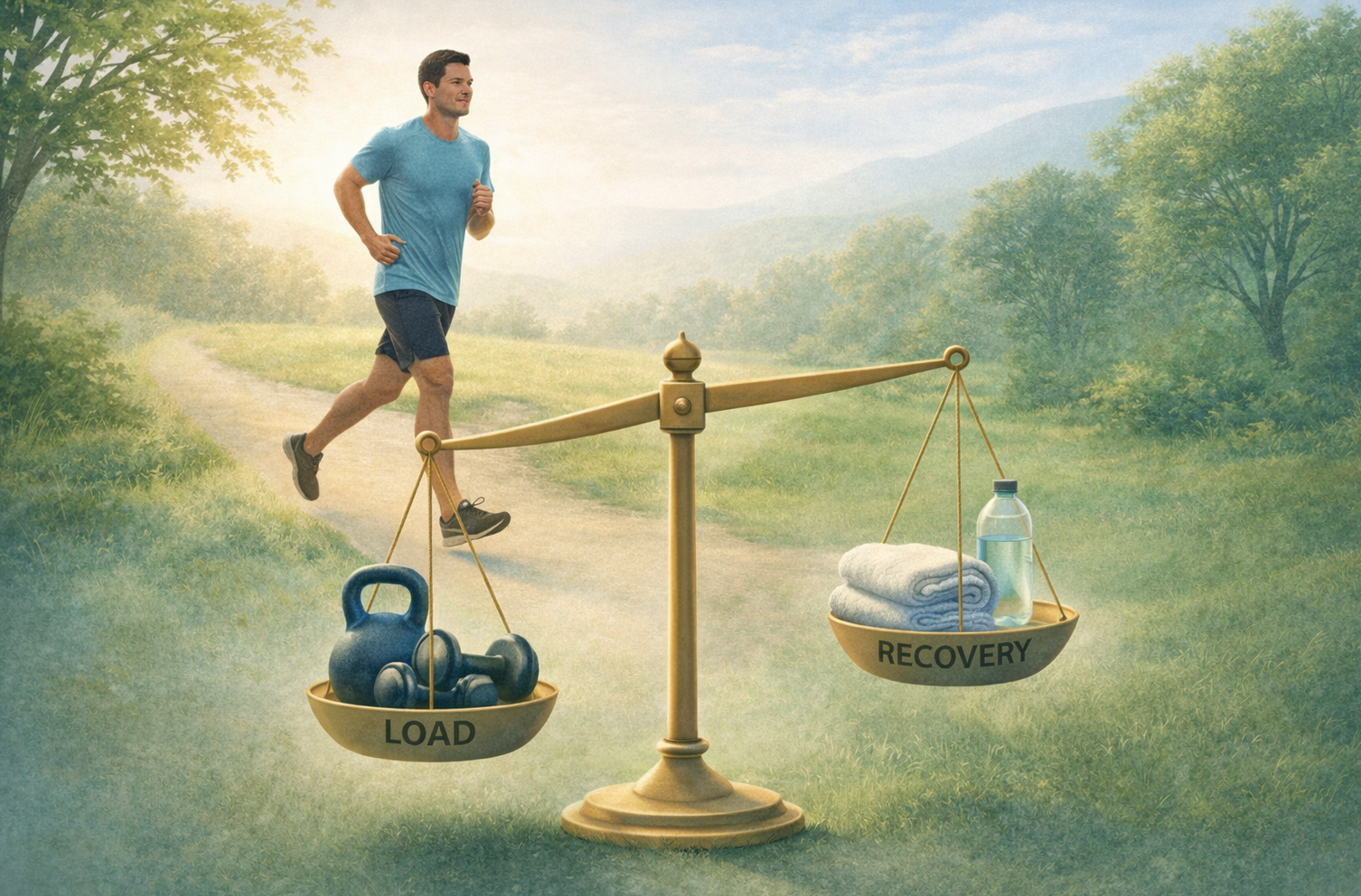
Some research would suggest around 80% of injuries are due to ‘too much too soon’ where the demand is far greater than your current capacity.

You may need to more gradually stress your tissues and allow time for adaptation to occur.

“Long term consistency trumps short term intensity” - Bruce Lee

For more detailed info on load management please see here.

“Always be building your capacity”

In life we know there will always be times when you will be getting sick, under extreme stress (or fighting the threat of a global pandemic).

So when things are relatively calm and stable, it is worth investing time and energy into building your physical and mental capacity so you are able to effectively deal with the challenges that will come your way.


Equanimous

Equanimity = calmness and composure especially in a difficult situation

This is probably the hardest one to master.

Could you re-conceptualize an injury from a problem to be avoided to an opportunity to learn more about your body and become more robust and resilient?

index.jpg

Equanimity is a revered emotion and an attitude that is cultivated by a number of major religions and ancient philosophies.

Treat success and injuries the same.

Develop a growth mindset.

Injury isn’t always a bad thing - story of the horse who ran away - bad luck vs good luck - it doesn’t actually exist.

Everything happens for a reason.

Ultimately injuries provide us an opportunity to learn more about our bodies and grow stronger and more resilient in the process.

Worrying about an injury is a low-vibrational state.

Figuring out what you can put your energy into will bring about a faster resolution of symptoms as well as taking your focus off any negative emotional states.

So next time you have an injury, please think RICE:

  • Resilient - the human body is an incredibly resilient self-healing machine

  • Intuitive - allow space and openness to listen to the wisdom of the body

  • Capable - what’s your current capacity relative to the demands of your sport and life?

  • Equanimous - calmness and composure in a difficult situation

If you have found this useful, I’d love you to let me know by leaving a comment below.

How To Run Faster - Without Getting Injured

How To Run Faster - Without Getting Injured


  1. Run More

The number one way to improve your running is to run more and gradually increase your weekly volume.

Every step you take improves your technique making you more efficient, builds mitochondria in your muscles that help make you a powerhouse.

Take any option to run more during the week and maybe even throwing some ‘doubles’ into your day where you run in the morning, and then again later in the day.

As you gradually build your volume, fitness will naturally finds it way to you, rather than you having to ‘chase’ fitness.

And don’t worry about your pace too much, think more about ‘time on your feet’.

“Train, don't strain.” - Arthur Lydiard


2. Get Your Volume / Intensity Balance Right 

One of the common mistakes new runners make is increasing too many things at once - e.g. both pace and volume, especially if they have an event on the horizon. 

Running too much in your high intensity zone is stressful for your body and can lead to increased stress and strain on muscles, tendons, bones and joints. 

To find your optimal running paces - you need to know your current best times over a 3k or 5k distance. 

Then you can put this time into an online running calculator (e.g. Luke Humphrey Running Calculator).  This will then give you a breakdown of ideal your training paces for your long easy runs, threshold runs e.t.c.  

It also gives you a realistic time goal to work towards for your big running goals such as the marathon. 

3. Strength Train 

Identify your key weak links with the help of a running physio and then you can focus on building resilience and turning your weaknesses into your strengths.  Strength training can be easily done at home after a run - it shouldn’t take more than 10-15 mins x 2 per week. 

4. Recovery 

Effective recovery is the key to absorbing the benefits of training and progressing as a runner.  Getting enough carbs to fuel your running and enough protein to re-build your tissues is critical.  Sleep is a big one to help ‘press save’ on your training. Keeping your soft tissues healthy with regular body tuning / panel beating with massage/foam rolling/dry needling is useful. 

5. Shoes 

Having a good pair of shoes that suits your foot is key - getting assessed by a podiatrist or physio can be invaluable in helping your find the right shoe for your foot.  Rotating your shoes regularly and updating them before they are too worn is important in protecting your feet and legs.

BONUS TIP

To run faster - rather than striding out - that can add stress to your lower limbs, keep your cadence high and lean forwards from your ankles. Gravity will pull you forwards and all you need to do is pick up your feet behind you. A much more efficient way to run.

Is it worth foam rolling your ITB?

If you walk into any gym, you may see someone sadistically foam rolling their ITB, making all sorts of interesting faces.

The ITB, if you are unsure, stands for Ilio-Tibial Band - that is the long fibrous tissue that runs from the hip down to the knee along the outside of your thigh (see pic below).

An irritated ITB can lead to pain and inflammation in the outside of the knee, especially in runners and cyclists. If not addressed early, this can lead to ongoing pain and can be tricky to manage.

Screen Shot 2020-03-29 at 8.20.12 pm.png

To roll or not to roll?

Recently there has been a lot of noise being made about the fact that regular foam rolling and stretching doesn’t physically change the ITB at all.

Some researchers point out that it is impossible to ‘release’ your ITB with a foam roller because it takes thousands of kilograms of pressure to change it.

Proponents for the foam roller say that it helps keep the tightness under control and prevents runner’s knee.

Who is right?

Well yes the ITB is made from very tense connective tissue are it probably doesn’t change all that much. And I’d definitely agree you can easily stir things up if you are constantly and aggressively rolling.

And you don’t want to have super loose ITB’s either - having strong and resilient ITB’s are an important part strong and efficient running form.

Ideally, you want to have them ‘in-tune’ like a musical instrument - not too tight or too loose.

What is really happening when you roll?

While it is hard to say for sure, I suspect most of the benefits from foam rolling are coming from what lies directly under the ITB. Here you’ll find one of the quad muscles called the Vastus Lateralis (see diagram below).

When you look at the above picture, you could easily believe that the ITB is the main player on the outside of the thigh.

However, on closer inspection, the diagram below gives a much more accurate picture, showing the relative density of the ITB compared with the huge Vastus Lateralis (VL) on the left of the picture.

Cross section area: ITB vs VL (Vastus Lateralis)

Cross section area: ITB vs VL (Vastus Lateralis)

As you can see, while the ITB gets all the attention, the vastus lateralis has a huge cross sectional area and is the real workhorse of the leg.

The vastus lateralis muscles tend to become overloaded with lots of downhill running, squats and lunges.

Some muscles in the body due to their anatomy and location, are impossible to stretch effectively. The vastus lateralis is one of them.


Over time, one of the most common causes of pain on the outer side of the knee is from a build-up of tightness in the vastus lateralis (see trigger point referral patterns below).

So learning how to maintain flexibility by foam rolling in this area is hugely important to keep your knee and hip joints moving well.

How to foam roll the Vastus Lateralis:

Benefits to foam rolling the ITB/vastus lateralis:

  • improved short term flexibility and blood flow

  • releasing the muscles under the ITB (Vastus lateralis)

  • stimulate the para-sympathetic system to activate the healing and recovery process

  • connecting with your body and bringing awareness to any overly sensitive or tight areas

Things to keep in mind:

  • avoid rolling directly over the outside of the knee and hip joints

  • should never feel more then 5/10 pain. Regulate the pressure by using your upper body and core if needed. In the words of John Rusin, “Stop mindlessly foam roll like a jackass.”

  • if you’re getting ongoing tightness, you need to get to the root cause! Consider contributing factors such as shoe wear (time for a new pair?), training habits, too many hills, inadequate glute strength and capacity, inadequate carbohydrates before and during your run, inadequate protein for recovery

  • don’t bother trying to actually stretch the ITB - it’s anatomy is too complex to get an effective stretch

When to roll:

  • if you have extremely tight leg muscles, you can roll gently before you exercise (30-60 secs max)

  • the best time to roll is after you have finished exercising, when the muscles are warmed up

Conclusion:

  • above all listen to your own body - if it feels good to you, then keep foam rolling your ITB and outer quads

  • don’t spend too long foam rolling (2-3 mins total time to roll the major muscle groups) after you exercise is enough, with perhaps one longer stretching session per week

  • an even more effective approach, target the vastus lateralis with the foam roller by rotating 45 degrees onto your front, and slowly bend and straighten your knee as you roll

  • if you’re getting ongoing tightness and pain in the ITB, seek professional help with a Physiotherapist to help identify contributing factors

Questions?

Please leave a comment below…

More from the blog: