The Truth About Strength: It’s Not the Only Answer
The “strength fixes pain” myth is powerful, but misleading.
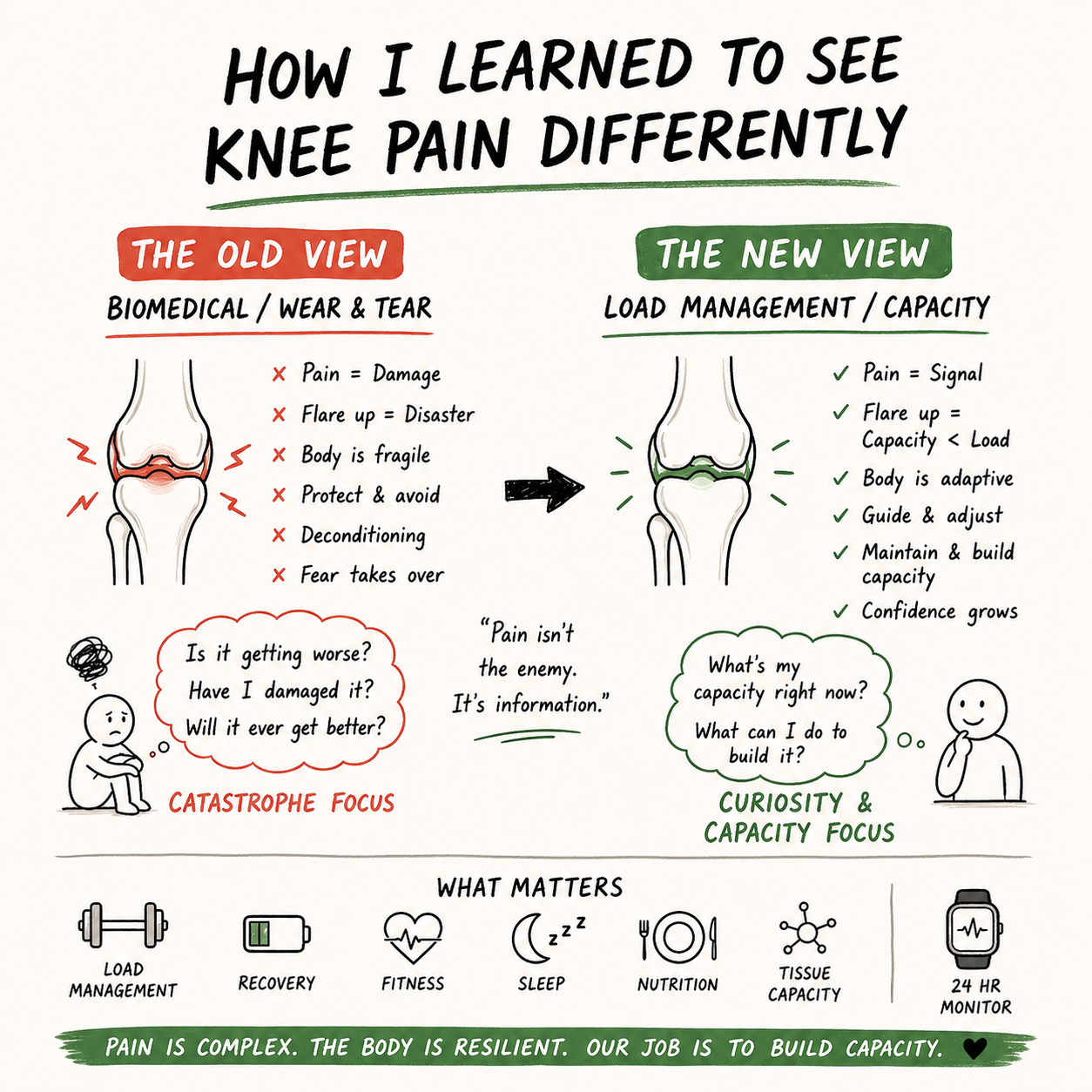
Strength alone won’t solve the issue because it doesn’t address the root of the problem—your body’s capacity to handle load, recover, and adapt.
Without increasing your overall capacity—how well your muscles, tendons, bones, and joints can deal with stress and recover from it—focusing on strength alone makes you more fragile.
It’s like having a stronger but still small and rigid cup. Eventually, it will crack under the pressure of all the load you’re placing on it.
And here’s where it gets worse: The simplistic advice of “just get stronger” carries a subtle but harmful message that you’re “weak,” which can make you feel fragile.
It reinforces the idea that your body isn’t capable, and this fear creates a vicious cycle—making you feel more out of control over your symptoms.
The Solution: Capacity and Functional Resilience
What you truly need is functional capacity.
Instead of focusing on just getting stronger, focus on expanding your body’s ability to handle load without breaking down.
Think of this as building a bigger cup—one that can hold more without spilling over.
Capacity is your body’s ability to not only manage the load but also clear out the “waste” that builds up—like lactate, a byproduct of intense activity.
When your body can’t clear this waste efficiently, it contributes to soreness and pain.
Here’s the good news: Your body is designed to use lactate as fuel when your systems are functioning well.
And that’s where mitochondrial health comes in.
The more mitochondria you have, and the healthier they are, the better your body can clear waste and generate energy.
That’s capacity in action—building not just strength but the ability to handle and recover from stress over the long term.
The Resilient Knee Project: A Different, Innovative Approach to Knee Health
This is exactly what The Resilient Knee Project is all about.
It’s not just about building strength; it’s about creating resilience through functional capacity.
And running, believe it or not, is the perfect way to do this.
We need to respect the high load and force that running provides.
If channeled correctly, those forces can create resilience in your bones, muscles, tendons, and joints.
This is the real strength we’re after: genuine, long-term capacity.
Running builds capacity, but here’s the catch—it takes time.
Months, even years, to fully develop.
You won’t see immediate results.
This isn’t a quick-fix solution, but it’s one of the best long-term investments you can make in your body’s health.
What you’re developing is a powerful physical asset that will serve you for the rest of your life.
Once you build this capacity, you’ll have the knowledge and skills to manage your knee pain independently.
You’ll become the expert on your own body, and you’ll no longer need to rely on therapists or experts to “fix you” with simplistic solutions.
No more embarrassing narratives about being weak.
No more relying on medication, surgery, or avoiding movement out of fear.
Why the Desire for Strength is So Intuitive
Now, let’s address something important: the desire to get stronger is incredibly intuitive.
It makes sense—if you’re in pain or feeling fragile, getting stronger seems like the most logical response.
Most healthcare professionals will validate this desire, telling you strength is the solution.
But remember, strength alone isn’t enough.
Think of it like David vs. Goliath. David didn’t win by matching Goliath’s strength—he won with strategy.