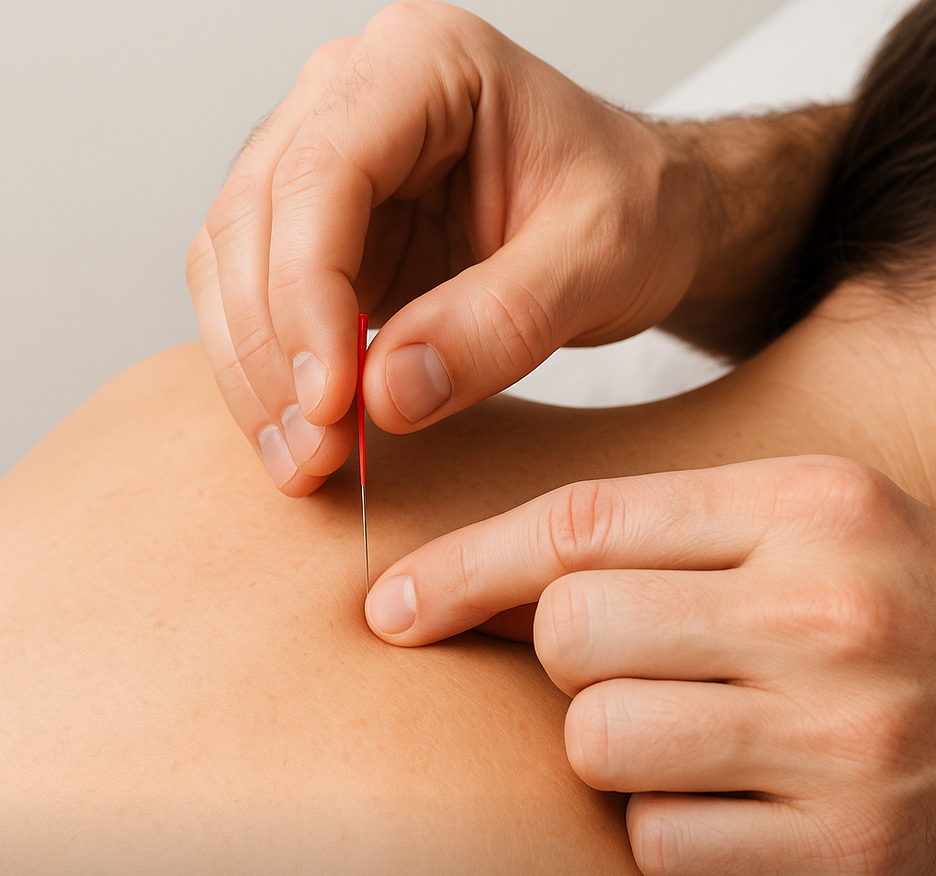

Pain

5 quick tips for sudden onset lower back pain

Screen Shot 2017-07-24 at 7.31.01 pm.png

1. Stay calm and confident

Twinges in the lower back are extremely common and can be thought of as like the 'common cold' of the spine.

A bad cold can certainly knock you around and make you feel pretty crappy.  With a cold, you know you're going to get better so you just accept it is part of life and don't stress too much over it.

On the other hand, a lower back flare up can sometimes leave you feeling rather vulnerable and fearful of damaging your spine.

Some typical thought patterns may be along the lines of:

  • 'Am I ever going to get better?'

  • 'Did I bulge a disc?'

  • 'Do they even heal?'

  • 'I may do more damage if I keep moving'

Negative thought patterns can trigger off a cascade events that can put your body into a 'fight or flight' state where some muscles get tight (superficial power muscles) and others (deep stabilisers) tend to become inhibited.

We know from pain research that the intensity of pain you experience correlates with the THREAT of tissue damage, not ACTUAL tissue damage.

Any way you can reduce the perception of threat can go a long way towards getting you on the right track with greatly reduced pain.

Spending a few minutes on these re-activation exercises will help no doubt help engage the core muscles.

But really it's more about pushing through the mental barriers and regaining confidence in your body's ability to heal.

"Your Body is an Incredible Self-Healing Machine" (Kelly Starrett).

It is amazingly robust and resilient.

We just need to set up the right environment for quality healing to take place.

2. Keep moving and stay at work if possible

If your back pain is more severe, you may need 1-2 days of rest and time off work, but then you gotta get moving. 

Staying active (and even trying to get your heart rate up a little) will increase blood flow through the body and promote the healing response. 

Being at work can be a good distraction from the pain and means you're not sitting around at home feeling sorry for yourself.

Take frequent short walks when you're at work. 

3. Change your position frequently

Don't be  sitting or standing in any one position too long.

If you have to sit at work, once again vary the position as much as possible.

Slumping is fine occasionally.

Don't get into the trap of holding yourself bolt upright in the 'perfect' posture.

Learn to chill a bit.

"Variability of posture trumps a perfect posture".

4. Book in to see your Physio

hip-physiotherapy.jpg

Try and find a Physio who spends time observing your movement patterning and who can perform some targeted manual therapy and dry needling to get things moving again.

Getting some personalised advice and treatment early on often pays big dividends in preventing ongoing issues and can save you a lot of hassles down the track.

5. If you're flare-ups are becoming more frequent or intense, this is a pretty good warning sign that something needs to change
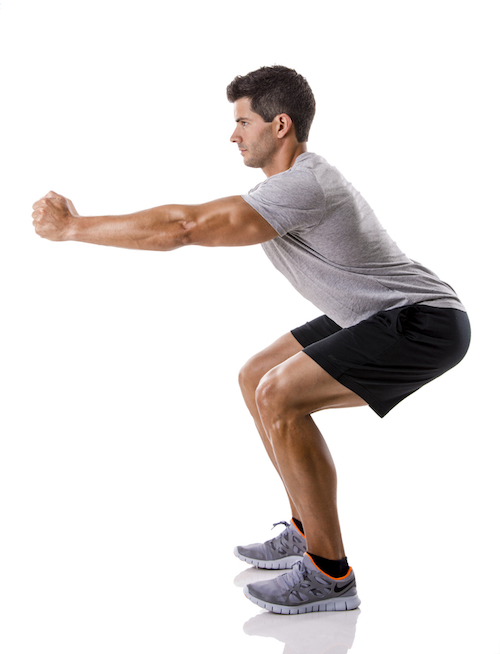
FMS-hero.jpeg

"Pain is a request for change" - Perry Nickelston

If you're able to, find some space and time in your life to re-build your movement immunity and resilience through things like:

  • gym

  • pilates

  • running

  • yoga

  • home stretching / strengthening program

static1.squarespace.com.jpg

Sensibly and gradually re-building the capacity of your body will be the most reliable long term strategy of overcoming chronic back pain. 

A Physiotherapist can help get you on the fast track and we'd love to assist you your journey.

Bookings:

If you think we are the right fit for you and you wish to get relief right away, use our simple online booking system to make an appointment.  If you would prefer to speak to us directly,  call us 1300 657 813

Book appointment online


Please tag a friend that may benefit from this and please leave any comments or questions below...




Neck pain? Try these 4 simple exercsies

Neck pain is really common. 

Thankfully, most neck pain is not related to anything structurally wrong, but more a warning sign from your body telling you, "it's time to move".

Your muscles don't like stagnant conditions, as the blood flow is restricted and creates acidic conditions in the tissues which contributes to the pain experience. 

If you can, pay close attention and become aware of the early stages of stiffness building up in your neck and shoulders. 

If you can get moving as soon as possible, there's a good chance you can avoid the downward spiral that often involves more intense neck pain, restricted movement and headaches.

These set of four exercises targets the upper back (thoracic spine), which is often very stiff in people who experience frequent bouts of neck pain. 

Cat-Cow

Start on your hands and knees with your back in a neutral position.Arch your back, lifting your head up and pushing your tail bone out, making a dish with your spine.Hold this position for one breath.

Start on your hands and knees with your back in a neutral position.
Arch your back, lifting your head up and pushing your tail bone out, making a dish with your spine.
Hold this position for one breath.

Next, arch your upper back by tucking your head and tail bone in and pulling your belly button in towards your spine, making a curve through your back.  Exhale completely as you activate your deep core stabilisers.Repeat x 10 times

Next, arch your upper back by tucking your head and tail bone in and pulling your belly button in towards your spine, making a curve through your back.  Exhale completely as you activate your deep core stabilisers.
Repeat x 10 times

Thread The Needle

Bring yourself up onto your hands and knees.Your hands should be under your shoulders and your hips over your knees.Take one hand off the floor and reach in and through between your other hand and leg on that side.Allow your shoulder and head to fol…

Bring yourself up onto your hands and knees.
Your hands should be under your shoulders and your hips over your knees.
Take one hand off the floor and reach in and through between your other hand and leg on that side.
Allow your shoulder and head to follow, moving down towards the floor as your hand reaches through.
Allow your upper back to twist and rest your head gently on the mat. 
You should feel a stretch in your upper back and shoulder blade.
Hold for 30 seconds and then repeat on the other side. 

Push-Up To Side Plank

Push yourself up into a plank position with your hands under your shoulders andPerform a half push up.As you're coming up, rotate your body, turning one arm up towards the ceiling.Allow your head and body to follow the movement.Your may rotate a lit…

Push yourself up into a plank position with your hands under your shoulders and
Perform a half push up.

As you're coming up, rotate your body, turning one arm up towards the ceiling.
Allow your head and body to follow the movement.
Your may rotate a little on the balls of your feet.
Return your hand to the floor and repeat on the other side. Repeat x 3 each side.

Thoracic Mobilisation On The Foam Roller

Lie with a foam roller in your mid-back, and hug your arms across your chest to open up the upper back.Lift your hips off the mat, and roll back and forth for about 30 seconds, pushing with your legs.  You may feel a few cracks and pops which i…

Lie with a foam roller in your mid-back, and hug your arms across your chest to open up the upper back.
Lift your hips off the mat, and roll back and forth for about 30 seconds, pushing with your legs.  You may feel a few cracks and pops which is a great sign your are releasing the joint stiffness.

Try spending 5 mins every morning and night and see how it helps your neck pain.

If you have any questions please contact us dan@kinfolkwellness.com.au

If you'd like to get a more personal assessment and treatment of your neck pain, please use our easy online booking system below to make an appointment:

book appointment now

Explain Pain Supercharged

Awesome evening attending the book launch of the new edition of 'Explain Pain: Supercharged' with Pain Educator, Author & Legendary Physiotherapist David Butler.


A few nuggets that I took away:


  • Chronic Pain (lasting more than 3 months) is complex - and needs to be considered from a Bio Psycho Social (BPS) perspective 


  • Pain is a protector. There is no need for a 'war on pain' & this defensive attitude can create more problems


  • There is no such thing as a 'pain receptor'. Your brain only ever receives 'potential damage messages' from the tissues, not 'pain' as such. Depending on the context, the brain then creates the pain experience to get your attention and motivation to change behavior.


  • Your thoughts about your pain and injury have real and direct correlations with the immune and nervous system.


  • Catastrophization about your experience  can literally turn up the sensitivity dial to the sensations coming from your tissues.


  • Innocuous twinges can become amplified, like an overly sensitive car alarm that goes off every time a strong wind blows.


  • "RECOVERY is right on the cards "


  • The pills aren't working for chronic pain sensitization (33,091 Americans died from opioid overdoses, according to the Centres for Disease Control—almost three times the number who perished in 2002), neither is the surgery. Might work better with pain education combined with gradual return to activity


  • Education + reconceptualising out-dated and unhelpful beliefs is the most powerful tool we have !

Do you have an issue with chronic pain?

We'd love to help.

Please click here to see how we can help you...

Top 10 Muscles That Respond To Dry Needling

Top 10 Muscles That Respond To Dry Needling

One of the benefits of dry needling is it's a very precise way of releasing a muscle. 

Compared to massage, getting a twitch response out of a muscle gives a very predictable and effective release, deep from within the muscle belly.

In this post, I wanted to give you some insight into some of the best responding muscles that dry needling can help with.

If you want to learn more about exactly how dry needling works, please read more here.

Of course dry needling can be done to any muscle.   The following post is to give you some insight into some commonly treated muscles that give especially good 'bang for your buck'.

*Please also see some important notes at the end of the post.

1.  Deltoids

deltoid-all-tps.gif

In terms of shoulder pain, the deltoid is a very under-rated muscle.

The deltoids include three sections (anterior, middle and posterior) that sit superficially around the shoulder.  The deltoid is involved in almost all shoulder movement.

The way the it wraps around the shoulder makes it a very difficult muscle to stretch and it is prone to building up tension.

Trigger points and knots often develop in the deltoid that can give rise to shoulder pain (see pic above). 

This pain can be quite severe and unrelenting and stubborn to usual treatment.

A common history is over-doing some push-ups and waking up the next day with pain in the front of the shoulder. 

Or someone who has done a lot of heavy over-head weights (Cross fitters...!) over the years and doesn't do much stretching. 

Sometimes it's the last small movement and final straw the breaks the camels back so to speak.

Dry needling the deltoid often gets some powerful twitch responses. 

Expect soreness and a dead arm feeling for a few days before things settle down.

2. Latissimus Dorsi

latissimus-dorsi-trp.jpg
Latissimus_dorsi.PNG

The latissimus dorsi is a fascinating muscle. 

It has attachments to the hip, shoulder, upper back, lower back and rib cage - and that makes it the largest muscle in the upper body.

Tightness in the latissimus dorsi has been shown to be an important cause of chronic shoulder pain and chronic back (especially upper back) pain.

Because of its extensive attachments, it can be another difficult muscle to stretch effectively. 

Dry needling gets in there and gets the job done.

If your lats are tight, you will need to add in some regular childs pose and over-head stretching, in addition to foam rolling your upper back.

3. TFL / ITB

438.jpg

The fastest way to release your ITB

Release the under-rated small muscle that attaches to it, called the Tensor Fascia Latae (TFL).

The TFL is a small but powerful hip flexor and usually tight from excessively sitting, walking, running and cycling.

When overly tight, can contribute to knee pain by causing mis-tracking of the kneecap. 

Combine dry needling with some specific gluteal activation and you will be well and truly on the way to saying goodbye to your ITB pain and tightness. 

If you look after your TFL well, there's a good chance that excruiating ITB foam rolling will not be required.  Happy days :-)

4. Glutes

Gluteus Medius_0.jpg

One of the cool things about dry needling is that we can access deep points in a muscle that you would otherwise be unable to access.  

The gluteus medius is an interesting muscle that can be dysfunctional in chronic lower back pain, hip pain and knee pain.  

Dry needling can immediately 're-set' the glutes and allow for a graduated re-loading program. 

Long-term, a well functioning gluteus medius will protect your hips, knees, ankles and lower back. 

5. Calf - Gastrocnemius & Soleus

Gastrocnemius.jpg

Calf muscle tension and limited flexibility is especially common in the modern age. 

When tight, the calf muscles are prone to cramping and eventually tearing.

Deep tissue massage can be effective, but can be very painful, bordering on intolerable.

Dry needling to the calf muscles, whilst intense, is quicker and more effective in its release. 

Expect some treatment soreness for 1-2 days post-needling.

And don't forget to re-build your calf capacity with an appropriate strengthening program.

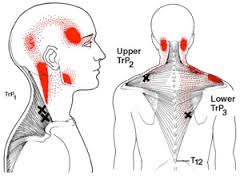
6. Upper Trapezius

78b36a394ffbec76dc123158ae7dcda7.jpg

Much like the calf above, the upper traps can be loaded with tightness. 

Causes can include poor posture, lack of physical activity and prolonged stress. 

Heavy handed massage can stir up more irritation in the muscle.

Dry needling is more like using a sniper approach - with a few direct releases, you can release the traps and get the blood flowing much more effectively and deeply. 

This study recommended dry needling for immediate pain reduction in upper body myofascial trigger point dysfunction.

Using heat on the traps via a wheat pack is really helpful, especially in the evening before bed.

Also make sure you are getting enough down time as chronic upper traps tension is a sign of sympathetic over-activity.

7. Infraspinatus

Infraspinatous-TrPs.jpg

The infraspinatus is a sneaky little muscle that sits behind your shoulder blade. 

It is often weak and gets overloaded when using your arm and shoulder.  

When the infraspinatus gets tight, you'll often feel pain in the front and deep part of your shoulder.

Dry needling de-activates the trigger points quickly, but be prepared for a dead arm for a few hours.

Don't forget to re-build with some simple strengthening exercises with a thera-band.


8. Wrist Extensors

extensor-digitorum-ring-finger-trp.jpg

Tennis elbow is a very common condition that primarily affects the extensor tendons on the outside of the forearm. 

The pain often drags on for months and years due to a very poor blood supply in the elbow tendons.

The research shows that dry needling releases a very specific chemical, known as Platelet-Derived Growth Factor (PDGF), that produces a strong increase in blood flow into the muscle.

In effect, blood is a healing agent, bringing oxygen and critical healing chemicals to the damaged cells.

No other technique that I know of is capable of doing this.

9. Biceps

biceps-tps.jpg

When was the last time you stretched your bicep muscle?  

Another muscle that gets used a lot, and builds up a great deal of tension. 

You'd be surprised how that niggling pain in the front of your shoulder improves after your biceps is released through dry needling.

10. Hamstrings

Biceps Femoris, Semitendinosus, Semimembranosus.png

Tight hamstrings are pretty common. 

Stretching them normally does more harm than good (see here).  

Dry needling produces a quick and effective release.

Specific strengthening exercises that lengthen the muscle gives the best long term solution. 

Conclusion

Dry needling certainly isn't for everyone, but it can be a very effective and powerful treatment in the right context. 

Two quick notes:

1.  There are different types of dry needling and this blog refers to the type that activates a local twitch response. 

This is very different to acupuncture and dry needling where the needles are inserted superficially and left in for 20 minutes as the practitioner leaves the room. 

2.  Dry needling is always used as part of comprehensive treatment approach

This includes assessing your thoughts and beliefs about your injury, movement patterning and general health considerations. 

Specific exercises targeted towards your individual needs will help give you the best long-term outcome.

If you have any questions about dry needling - please feel free to give us a call 1300 657 813.

If you'd like to schedule a dry needling session and start feeling better straight away, please book online below:

Schedule A Dry Needling Session now

The Best Defence Is A Good Offence

If you've had a few niggles or been in pain recently, you might find yourself feeling a little overwhelmed. Sometimes the pain forces us into a defensive or protective mode.

Defensive strategies could include:

  • ignoring the pain & hoping it will go away
  • regularly taking pain killers / anti-inflammatory to numb the pain
  • reducing or eliminating any sort of exercise for fear of causing a flare up

You may also find yourself bracing your body rigidly, every time you move or you may hold your breath (subconsciously) the majority of the time.

Defence IS an important short-term strategy for a new injury, don't get me wrong.

But, after a few months, you're tissues have generally healed the best they can.

Then you've got to take a leap of faith and breakout out of defence and start to re-build proactively...step by step.

When planning your offensive play...success comes from having multiple strategies.

Just like in sport, if you're repeating the same offensive strategy all the time, your body will quickly see it coming and the positive adaptations become limited (and the risk of overuse injuries increases).

The best offence to build resilience in your body would include a good variety of types of movement.

Forming the foundation would be doing a form of Cardio aerobic exercise (whatever you enjoy), Pilates, Yoga, strengthening with a PT, and weight bearing exercise to stimulate bone growth.

Challenge for 2018:

Try x 5 NEW types of exercise or movement approaches that you haven't tried before.

TIP: try something that is the opposite of what you currently do. If you tend towards high intensity exercise than try something easier. If you tend to do easy stuff try something more intense.

Some movement options you could try:
- hiking, stand up paddle boarding, rock climbing, triathlon, cross fit, F45, orange theory fitness, Feldenkrais, karate, surfing, dancing, Parkour, BOUNCE, acroyoga, foam rolling, restorative Yoga, sprinting, 7 min workout, mountain biking, tennis, Aussie rules (especially for women!)

Keep challenging yourself.

Your body and mind will thank-you :-)